 Print this Article
Question
Do we say Tashlich when the first day of Rosh Hashana falls out on Shabbat?
Answer
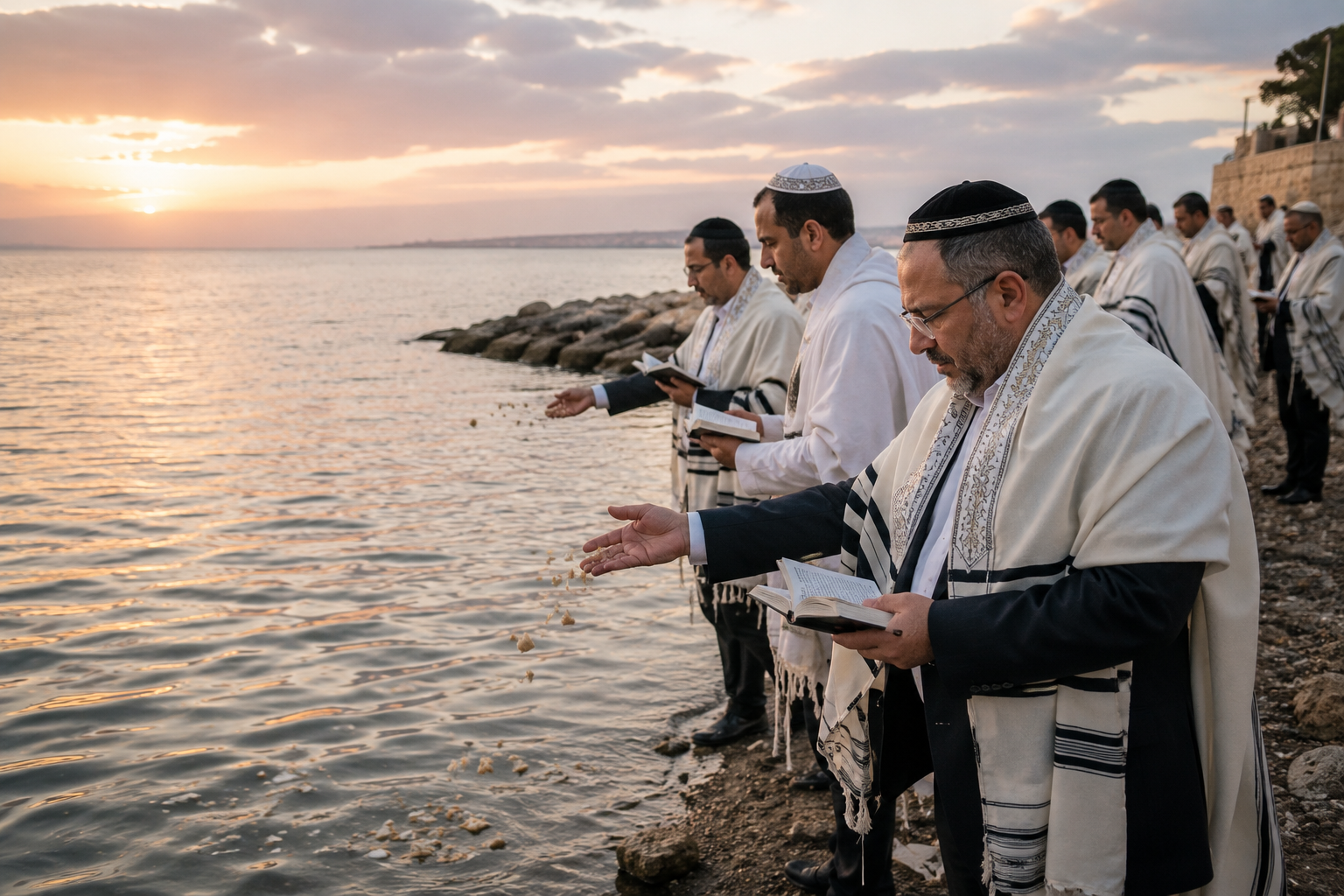
The Rema (Orach Haim 583:2) writes of the minhag of Tashlich is going to a river and reciting the pesukim of “Ve’tashlich bimtzulot yam kol hatotam” (“And You shall cast all their sins into the depths of the sea,” Michah 7:19). The minhag is to say Tashlich on the first day of Rosh Hashana after Minha.
The Mishnah Berurah (583:9) elaborates on the source and details of Tashlich. He cites a Midrash that when Avraham Avinu went to bring Yitzchak as the Akedah, he crossed a river that rose until the water reached his neck, and he cried out to Hashem to save him, since his life was in danger. Going to a river for Tashlich is done to commemorate this story of the Akeidah.
The Shelah brings down that if the first day of Rosh Hashana falls on Shabbat, Tashlich is not recited that day, out of concern that it could lead to hillul Shabbat, and that it should instead be said on the second day. The Pri Megadim explains the concern more precisely: since people commonly carry siddurim or humashim to the river to say Tashlich, and the area may not be enclosed by a halachically valid eruv, there is a worry that one might carry outside the eruv and transgress the issur of hotza’ah (carrying).
The Ben Ish Hai (Nitzavim, 12), however, writes that the minhag is to say Tashlich even on Shabbat, and that we are not concerned about hillul Shabbat. If Tashlich was not said on the first day, it should be said on the second day, after musaf. The Hazon Ovadia (Yamim Noraim 187) likewise brings that Tashlich should be said on Shabbat, but only in a place that has a proper eruv. The Or L’Tzion adds, citing earlier sources, that this was indeed the minhag in Yerushalayim, and that one should try to follow that practice where possible.
The Or L’Tzion raises an interesting question: Why are we concerned about carrying in reshut harabim when it comes to blowing the shofar on Shabbat (which is the reason Hazal instituted that the shofar not be blown when Rosh Hashana falls on Shabbat), yet we are not equally concerned when it comes to Tashlich? He answers that the entire gezerah in the case of shofar stems from the fact that blowing shofar is a hiyuv min haTorah. Because it is an obligation, a person might become so frantic to fulfill it that he forgets himself and comes to carry the shofar through a public domain. Tashlich, by contrast, is only a minhag, and may even be said afterward if missed, so there is no comparable concern that a person will lose his composure and come to carry.