 Print this Article
Harav Yishai Natan –
The Mishnah‘s Restrictions
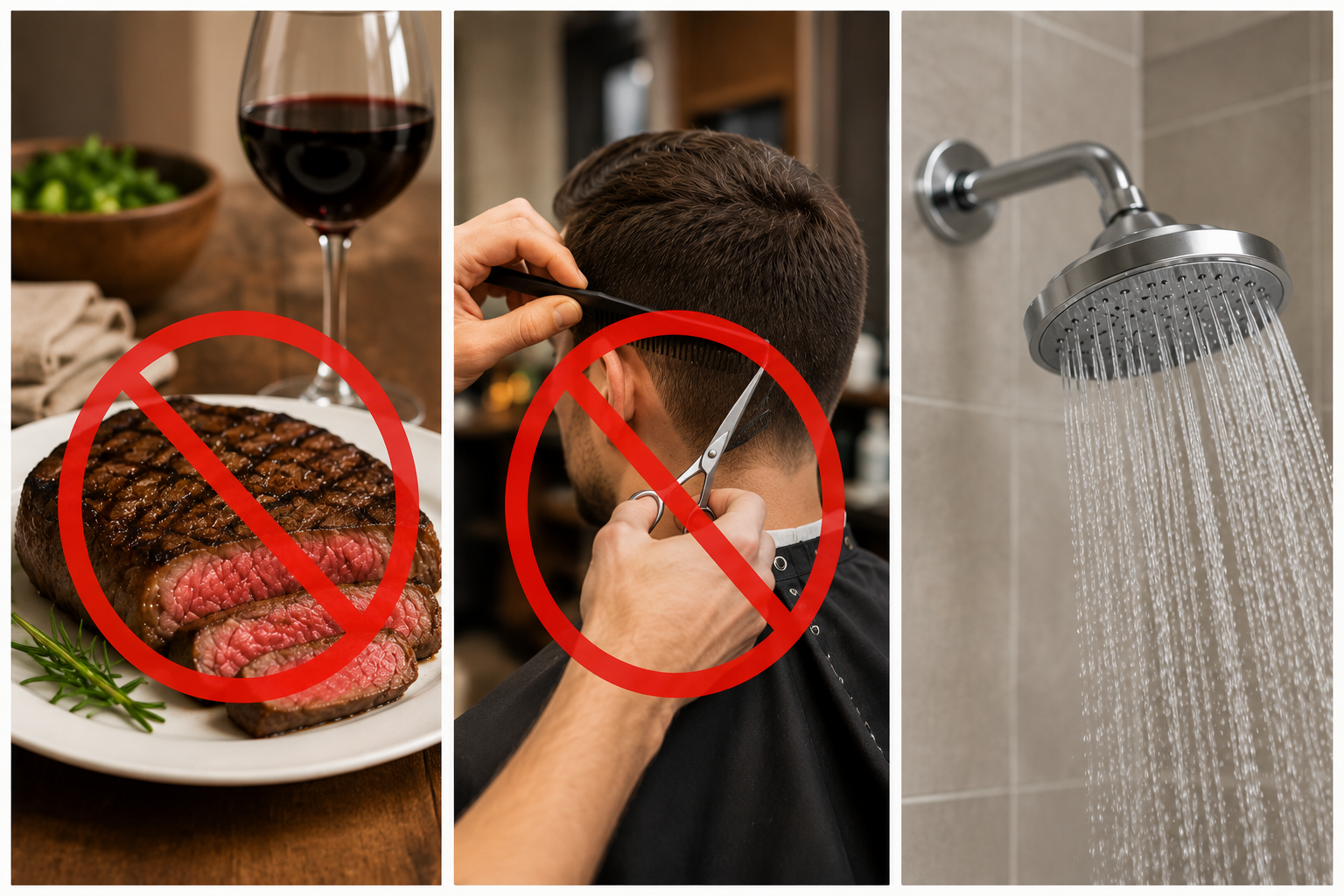
The Mishnah (Ta’anit 26b) records three restriction:
- Beginning with Rosh Hodesh Av, we decrease our joy.
- During Shavua Shehal Bo, we do not get haircuts or do laundry.
- At the Se’udah Hamafseket on Erev Tisha Be’Av, we do not eat meat.
Those are the only restrictions found explicitly in the Mishnah.
Additional Customs Beginning on Rosh Hodesh Av
The additional restrictions observed during the Nine Days come from a Beraita brought in Yevamot (43a).
One example is neti’ah shel simhah—planting for the sake of joy.
Originally, this referred to planting trees for a hatan and kallah when they became engaged or married. We no longer have this custom, but today’s equivalent would be planting trees, bushes, flowers, or new grass purely to beautify one’s property.
Routine maintenance, such as watering the lawn or mowing the grass, is completely permitted. The restriction applies only to new improvements that are done for beauty and enjoyment.
Another example is binyan shel simhah—building for the sake of joy.
Originally, this referred to building a special house for a hatan and kallah. Today, this would include projects such as building or renovating a vacation home, remodeling purely for appearance, or making cosmetic upgrades that bring pleasure.
Painting a house simply for beautification would likely fall into this category. However, continuing necessary construction on a home that is already being built is a different discussion.
The Beraita also states that we do not perform nisuin or erusin during this period.
Finally, it says to reduce masa u’matan—business activity.
This does not mean a person should stop working or lose money. Rather, we try to reduce unnecessary business whenever practical.
The same idea applies to purchasing new items. If buying something brings a person joy, it should ideally be postponed until after the Nine Days.
For example:
- Buying new shoes.
- Purchasing new clothing.
- Buying other enjoyable items.
Even sending gifts should preferably wait until after the Nine Days, since receiving a gift often creates even greater happiness than buying something for oneself.
Similarly, exchanging an item at a store for something else is treated like making a new purchase and should also be postponed when possible.
Flying During the Nine Days
People often ask whether they are allowed to fly during the Nine Days. Does the Mishnah mention anything about flying? Of course not.
The concern comes from the idea that this is a period of unfavorable mazal. Since the Gemara tells us to avoid placing ourselves in situations of risk during the Nine Days, some people are hesitant to fly.
Today, flying is generally considered very safe. Because of that, many poskim permit flying when there is a need. Others still recommend avoiding it if possible because you are traveling during a time that Hazal viewed as having unfavorable mazal.
The main point is that there is no specific halachah prohibiting air travel during the Nine Days. The concern is simply to avoid unnecessary danger whenever possible.
However, if someone is flying for a vacation, that is a different issue. Since vacations are generally considered activities of simhah, they should be avoided during the Nine Days regardless of the flying itself.
The Custom of Not Eating Meat
Although the Mishnah only prohibits eating meat at the Se’udah Hamafseket on Erev Tisha Be’Av, the custom of refraining from meat throughout the Nine Days comes from the Rishonim.
Shulhan Aruch brings three opinions:
- One opinion prohibits meat only during Shavua Shehal Bo.
- A second opinion prohibits meat during the Nine Days.
- A third opinion begins from the Three Weeks.
The accepted Sephardic minhag follows the middle opinion—not eating meat during the Nine Days.
Meat on Rosh Hodesh Av
What about Rosh Hodesh Av itself?
Sephardim eat meat on Rosh Hodesh Av. The restriction begins afterward, during the Nine Days.
Ashkenazim, however, generally begin refraining from meat already on Rosh Hodesh Av.
Attending a Siyum
May someone attend a siyum during the Nine Days and eat meat?
If a person regularly makes a siyum whenever he finishes a masekhet, there is no issue. He may celebrate with a meal that includes meat.
Even someone who normally does not make a siyum has what to rely upon if he wishes to celebrate after genuinely completing his learning.
However, if someone finished learning a masekhet weeks earlier and intentionally left over the final paragraph only so he could complete it during the Nine Days and eat meat, virtually everyone agrees that this is not appropriate.
A person may speed up or slow down his learning so that he naturally finishes during the Nine Days. What he should not do is artificially save the last few lines simply to create a siyum.
What about Mishnayot?
Finishing one tractate of Mishnayot is generally not considered enough to justify a meat meal. Completing all of Shas Mishnayot would certainly qualify. Finishing an entire seder may also qualify, but one should ask his Rav.
Children and Meat
May young children eat meat during the Nine Days?
Yes.
Hacham Ovadia Yosef writes that children under twelve years old may eat meat without concern. Around the age of twelve, parents should begin educating them to follow the custom.
Is Chicken Included?
Does the prohibition include chicken?
Yes.
Shulhan Aruch rules that chicken is included in the custom of refraining from meat. Although the Tur holds that chicken is permitted, Maran rules that chicken and meat are treated the same.
If someone genuinely needs to eat meat—for example, because he cannot tolerate dairy—he should ask his Rav. If the choice is between beef and chicken, chicken is preferable because there are opinions that permit it.
Likewise, a pregnant woman who is craving meat may eat it, and someone who is ill may also eat meat when medically necessary. Each situation should be discussed with a Rav.
Tasting Food for Shabbat
If a wife is cooking for Shabbat, may she taste the food during the Nine Days?
Yes.
Tasting is not considered eating. The custom only prohibits eating meat, not tasting food to determine whether it needs more seasoning.
Drinking Wine
The custom regarding wine is somewhat different from meat.
Hacham Ovadia Yosef writes that in Yerushalayim, many people had the custom to refrain only from meat while continuing to drink wine during the Nine Days.
However, the custom of Ben Ish Hai and most Sephardim—especially in America—is to refrain from both meat and wine.
Havdalah During the Nine Days
What should be done about Havdalah on Motsa’ei Shabbat?
For Sephardim, there is no dispute. One makes Havdalah over wine as usual and drinks it.
Among Ashkenazim, there is more discussion. The Mishnah Berurah writes that it is preferable, when possible, to have a child drink the wine.
Even grape juice is treated like wine regarding this custom.
Everything we have discussed until now applies to the Nine Days.
Now we’ll begin discussing the restrictions that are unique to Shavua Shehal Bo, including bathing, swimming, haircuts, and laundry.
Shavua Shehal Bo – Bathing
Everything we have discussed until now applies to the Nine Days. Now let’s move on to the restrictions that apply specifically during Shavua Shehal Bo.
The Mishnah only mentions two prohibitions during Shavua Shehal Bo: haircuts and laundry. So where does the custom of not bathing come from?
The answer is that it is not found in the Mishnah or even in the Gemara. Rather, it developed as a minhag that was accepted by Klal Yisrael and is later brought by the Shulhan Aruch.
Someone might ask, “Where did this custom come from?”
It is simply an accepted minhag. Although it is not mentioned in the Gemara, it became the accepted practice.
Showers During Shavua Shehal Bo
For Sephardim, the custom is much more lenient than many people think.
A cold shower is certainly permitted.
In this context, however, “cold” does not necessarily mean freezing cold. Even a warm shower is generally permitted according to Sephardic practice.
Among Ashkenazim, some are stringent even regarding cold showers during the Nine Days. Sephardim, however, generally permit cold or warm showers because they are not considered a form of ta’anug.
Some poskim even permit hot showers. Their reasoning is that today people shower primarily to stay clean, not for pleasure. Since daily showers are part of normal hygiene, they are no longer viewed as bathing for enjoyment.
Swimming During Shavua Shehal Bo
What about swimming?
For Sephardim, this question is only relevant during Shavua Shehal Bo, since the restriction on bathing does not begin before then.
Some explain that swimming should be avoided because of sakanah. But is a swimming pool actually dangerous? That is debatable.
Yalkut Yosef explains that the concern for sakanah mainly applies to the ocean or the sea. A swimming pool is generally not considered dangerous.
Furthermore, even if bathing is prohibited, a pool is usually cold water, and cold water is generally not considered ta’anug according to Sephardic custom.
On the other hand, some poskim argue that although a cold shower is taken for cleanliness, swimming in a pool is done purely for enjoyment. Therefore, they maintain that swimming should still be avoided.
Interestingly, the earlier edition of Yalkut Yosef states that swimming in a pool is permitted, and that only the ocean presents a concern for sakanah. In later editions, however, he writes that even swimming in a pool should preferably be avoided. Hazon Ovadia also writes that it is better not to swim in a pool during Shavua Shehal Bo.
Haircuts and Shaving
This is one of the two prohibitions explicitly mentioned in the Mishnah regarding Shavua Shehal Bo.
During Shavua Shehal Bo, one may not get a haircut or shave.
Ashkenazim begin this restriction from the Three Weeks, while Sephardim begin only during Shavua Shehal Bo.
Shaving Around Ashkenazim
A common question is whether a Sephardi who is spending time in an Ashkenazi yeshivah may continue shaving before Shavua Shehal Bo, even though everyone else has beards.
Hacham Ovadia Yosef writes that there is no concern of Lo Titgodedu.
The reason is simple. Everyone knows that Sephardim follow a different custom and continue shaving until Shavua Shehal Bo. Therefore, there is no appearance of creating separate groups.
Shaving for Work
May someone shave during Shavua Shehal Bo because of work?
Many earlier teshuvot discuss cases where a person might lose his job if he appeared unshaven. In such cases, since it is considered a davar ha’aved, there can be room for leniency.
Today, however, that situation is much less common. Most people are not going to lose their job or business simply because they have not shaved for a few days.
They may feel uncomfortable or embarrassed, but that alone usually does not qualify as a davar ha’aved.
If someone truly believes his livelihood is at stake, he should discuss his specific case with his Rav.
Haircuts for Girls
Yalkut Yosef writes that girls may receive haircuts during Shavua Shehal Bo. The prohibition applies specifically to boys.
Among Ashkenazim, girls also avoid haircuts during this time. However, even according to Ashkenazim, removing hair from the legs or similar areas is not included in the prohibition against haircuts.
Cutting Fingernails
May a person cut his fingernails during Shavua Shehal Bo?
This is a dispute between the Taz and the Magen Avraham. It is not a difference between Ashkenazim and Sephardim.
Practically speaking, this issue rarely comes up because people normally cut their nails on Friday in honor of Shabbat. Since Tisha Be’Av falls on Thursday this year, most people will have already cut their nails before Shavua Shehal Bo begins.
However, if someone forgot to cut his nails beforehand and genuinely needs to do so, he may cut them.
A woman preparing for the mikveh may certainly cut her nails as well.
Laundry During Shavua Shehal Bo
The second prohibition mentioned explicitly in the Mishnah is laundry.
During Shavua Shehal Bo, adults may not do laundry.
There is one exception. Baby clothes may be washed. Clothing for children under approximately three years old may be laundered because they constantly become dirty and need clean clothing.
However, even when washing a baby’s clothing, you may not add your own clothing to the same load. The leniency applies only to the baby’s clothing.
What if someone wants to do laundry during Shavua Shehal Bo, not because he needs the clothing now, but only so it will be clean after Tisha Be’Av?
The Gemara discusses this issue as a mahloket, and Shulhan Aruch rules that it is prohibited.
For this reason, you may not even bring your clothing to a dry cleaner during Shavua Shehal Bo, even if you will not receive it until after Tisha Be’Av. Although the dry cleaner is a non-Jew, anything that you may not do yourself, you may not ask a non-Jew to do on your behalf.
Undergarments and Socks
What about washing undershirts, underwear, or socks?
The answer is no.
There is no distinction between regular clothing and undergarments. Washing any clothing is prohibited during Shavua Shehal Bo.
However, spot cleaning is permitted. If a small area becomes stained, you may spray it and scrub only that spot. The prohibition is against laundering the garment, not removing an isolated stain.
Wearing Freshly Laundered Clothing
Besides the prohibition against doing laundry, there is another restriction brought in the Shulhan Aruch.
One may not wear freshly laundered clothing during Shavua Shehal Bo.
This applies not only to outer garments, but according to Yalkut Yosef, it also includes underwear, undershirts, and socks.
Preparing Clothing Before Shavua Shehal Bo
Since we know Shavua Shehal Bo is approaching, we should prepare beforehand.
The simplest solution is to wear each freshly washed garment for a short time before Shavua Shehal Bo begins so that it is no longer considered freshly laundered.
The earlier edition of Yalkut Yosef suggests wearing each garment for about thirty minutes.
The newer edition, however, simply says to wear it for “eizeh zeman“—for some amount of time—without specifying an exact number of minutes. This follows the wording used in Hazon Ovadia.
Practically speaking, it depends on the situation. If you wear the clothing outside on a hot summer day, it may take much less than thirty minutes before it no longer appears freshly laundered. Even inside the house, there is no absolute requirement to wait thirty minutes.
The goal is simply that the clothing should appear worn.
Therefore, now is the time to prepare enough clothing for the coming week.
Different Opinions Regarding Undergarments
There are opinions that distinguish between outer clothing and undergarments.
According to these opinions, although undergarments may not be washed during Shavua Shehal Bo, freshly laundered underwear, undershirts, and socks may still be worn without any preparation.
Since there are different opinions on this issue, every person should follow the guidance of his Rav.