 Print this Article
HaRav Yishai Natan – Listen to the shiur below
Seudah Mafseket — The Final Meal Before Tish’a BeAv
As we approach Tish’a BeAv, one of the most misunderstood areas of halachah is the Seudah Mafseket, the final meal before the fast. Many people are unsure what they may or may not eat. There are essentially two accepted ways to observe the Seudah Mafseket. First, we will discuss the case where a person eats only one meal before the fast, and then we will discuss the custom of eating two separate meals.
One Cooked Food
The Mishnah teaches that during the Seudah Mafseket one may not eat more than one tavshil—one cooked food. This restriction applies only to cooked foods. Baked foods, such as bread, are not considered tavshil, so a person may eat as much bread as he wishes. The limitation applies only to foods that were cooked.
Naturally, meat and wine may not be eaten at the Seudah Mafseket. This is the explicit ruling of the Mishnah. It is important to understand, however, that the Mishnah itself only prohibits meat and wine during the Seudah Mafseket. Our custom of refraining from meat and wine beginning on Rosh Hodesh Av is a minhag from the Rishonim.
Fish During the Seudah Mafseket
The Shulhan Aruch writes that one should avoid eating fish during the Seudah Mafseket. Although we generally do not consider fish to be included in the prohibition of meat, since the prohibition of meat itself applies during this meal, the Shulhan Aruch recommends avoiding fish as well.
This is not an absolute prohibition. If someone needs to eat fish because he cannot eat anything else, he may certainly do so. Furthermore, several authorities, including the Gra and the Aruch HaShulhan, permit eating fish during the Seudah Mafseket. Nevertheless, one should try to avoid it if possible.
One Food or Two?
Another discussion concerns whether identical foods cooked separately are considered two different tavshilin. For example, if a person cooks rice in two separate pots, are they considered two cooked foods?
There is a dispute regarding this issue. Therefore, it is preferable not to eat from both pots. Hacham Yitzhak explains that if the two pots were prepared differently—for example, each contains different spices—they are considered two separate tavshilin. However, if both pots contain identical rice and two pots were used only because a large quantity was needed, they are considered one tavshil.
Two Foods in One Dish
Suppose a person prepares shakshukah, which contains both eggs and tomatoes. Although tomatoes may be eaten raw, once they are cooked they count as a cooked food. Since both eggs and tomatoes are cooked together as one unified dish, and is a normal way to serve this dish, the entire shakshukah is considered one tavshil for the purposes of the Seudah Mafseket.
Eggs and Lentils
There is a widespread custom to eat either eggs or lentils during the Seudah Mafseket, since these are traditionally foods of mourners. Their round shape symbolizes the cycle of mourning, reflecting that Tish’a BeAv is observed as a period of avelut. However, since only one tavshil may be eaten, one should choose either eggs or lentils—not both.
When This Applies
All of these laws apply when the Seudah Mafseket is the only meal eaten before the fast. In that case, one must ensure that he eats only one cooked food, avoids meat and wine, refrains from fish whenever possible, and follows all of the guidelines discussed above.
The Custom of Eating Two Meals
The Rama records another accepted custom regarding the Seudah Mafseket. Rather than making the final meal before the fast one’s primary meal, many people first eat a full, regular meal with many cooked foods and then later eat a small Seudah Mafseket immediately before the fast.
Under this custom, a person first eats whatever he wishes during the main meal. Afterward, he interrupts before beginning the Seudah Mafseket, which usually consists of bread together with an egg and ashes, following the traditional custom.
Making a Proper Interruption
If a person simply finishes his first meal, recites Birkat HaMazon, and immediately washes again to begin the Seudah Mafseket, this creates a halachic problem. There is a dispute whether this would constitute an unnecessary berachah or even a berachah le-vatalah. Rav David Yosef writes that it may even be considered a true berachah le-vatalah.
For this reason, one should make a clear interruption between the two meals. Many people accomplish this by praying Minhah between the meals, which certainly constitutes a valid interruption. Although this is not always practical, one should nevertheless create a noticeable break. A practical solution is to wait approximately ten to fifteen minutes while occupying himself with something unrelated to food before beginning the Seudah Mafseket.
Is Bread Required?
A common question is whether bread is required during the Seudah Mafseket.
Strictly speaking, no authority requires bread. However, since the meal is called a seudah, many maintain that it is proper to include bread.
Furthermore, if a person already ate a bread meal after hatzot and then later plans to eat the Seudah Mafseket without bread, a problem arises. His earlier bread meal effectively becomes his primary meal, and that meal contained multiple tavshilin. Therefore, if one ate bread after hatzot, he should also eat bread during the Seudah Mafseket so that it remains his actual final meal before the fast. Besides this consideration, there is also an additional inyan, based on Kabbalah, to include bread in the Seudah Mafseket.
How the Seudah Mafseket Should Be Eaten
The Shulhan Aruch records the custom of sitting on the floor while eating the Seudah Mafseket. If a person is eating only one meal before the fast, that meal should be eaten while seated on the floor. If he follows the custom of eating two meals, then only the second meal—the actual Seudah Mafseket—should be eaten on the floor.
Another custom mentioned by the Shulhan Aruch is that three men should not eat the Seudah Mafseket together. Otherwise, they would become obligated in a zimun, and a zimun reflects an element of joy that is inappropriate at this time.
If three men did eat together, there is a dispute among the later authorities. The Mishnah Berurah rules that they should nevertheless omit the zimun. Hacham Ovadia Yosef, however, rules that if they already ate together, they should recite the zimun. Ideally, however, one should simply avoid creating the situation in the first place by ensuring that three men do not eat the Seudah Mafseket together.
The Five Inuyim of Tish’a BeAv
There are the five inuyim that apply throughout Tish’a BeAv. Beyond these, there are several additional restrictions that we will discuss.
The first and most obvious prohibition is eating and drinking. Questions often arise regarding someone who is ill and is uncertain whether he should fast. This is not something that should be decided independently. A person should first consult his doctor and then speak with his Rav, who will determine the proper halachah based on the doctor’s medical advice.
Washing
One may not wash beyond the knuckles that connect the fingers to the palm. This applies whether washing in the morning after waking up, after using the restroom, or at any other time.
If there is dirt on one’s hands, however, the dirt may be washed away. If the dirt extends onto the palm, the palm may also be washed. The prohibition only applies to washing for pleasure. Washing to remove dirt is not included in the gezerah.
The same applies to washing one’s face. One should not wash his face or eyes simply for comfort. However, if a person wakes up with dirt or discharge around his eyes, he may wash only the affected area. Since the purpose is to remove dirt rather than for enjoyment, it is completely permitted.
Children
Children may wash normally, and there is no reason to be stringent with them regarding washing.
Likewise, there is no obligation to train children to fast on Tish’a BeAv, even for part of the day. While Yom Kippur has a concept of gradually training older children before they become Bar Mitzvah, the other fast days do not carry the same requirement. Although it is always worthwhile to educate children appropriately, this is generally not the area that should receive primary emphasis.
Brushing One’s Teeth
A common question is whether one may brush his teeth on Tish’a BeAv.
There are two concerns. The first is that one may accidentally swallow water. The second is whether brushing constitutes prohibited washing.
The Mishnah Berurah writes that if a person is in significant discomfort, he may brush his teeth, provided he keeps his head lowered and is careful not to swallow any water.
Regarding the concern of washing, brushing one’s teeth is fundamentally different from washing for pleasure. A person brushes because his mouth feels dirty, not for enjoyment.
Mouthwash and Breath Fresheners
Liquid mouthwash, such as Listerine, is generally permitted, provided one does not swallow it. Since it is not considered food and is merely rinsed and spit out, it is not included in the prohibition.
Listerine strips, however, are different. They dissolve in the mouth and are intentionally swallowed. Since they function more like food, they should not be used on Tish’a BeAv.
Caffeine Pills
A person who normally consumes caffeine and experiences severe headaches without it, many poskim hold he may take caffeine pills, as long as they are swallowed without water whenever possible.
Since the pill is taken solely for its medicinal effect and not as food, it is not considered eating.
Anointing the Body
Another one of the five inuyim is anointing the body with oils or similar products for pleasure.
Deodorant
Deodorant is completely permissible on Tish’a BeAv. Its purpose is not enjoyment but rather to eliminate body odor or prevent it from developing. Whether it is a spray, roll-on, or stick deodorant makes no difference. Since it is not applied for pleasure, it is permitted.
Perfume and Cologne
Perfume and cologne depend upon one’s intent.
If they are applied simply for enjoyment or to smell pleasant, they should not be used on Tish’a BeAv. However, if a person is using them because he is embarrassed by body odor or is concerned that he smells unpleasant, they are permitted. The determining factor is whether they are being used for pleasure or merely to remove an unpleasant condition.
Lotion
The same principle applies to lotion.
If someone applies hand lotion or body lotion because it feels pleasant, it should not be used. However, if a person’s hands, lips, or skin are dry, cracked, or painful, lotion may be applied since its purpose is to relieve discomfort rather than provide enjoyment.
Leather Shoes
Another of the five inuyim is refraining from wearing leather shoes.
Any shoe containing leather, whether on the upper portion or the sole, may not be worn on Tish’a BeAv. Leather belts and other leather accessories, however, are completely permissible. The prohibition applies only to shoes.
Comfortable Non-Leather Shoes
Some poskim maintain that certain modern non-leather shoes are so comfortable that they should also be prohibited, since they provide the same level of comfort as leather footwear.
Nevertheless, the accepted Sephardic practice is not to be stringent in this regard. Wearing comfortable non-leather shoes is permitted.
Children and Shoes
Although children are not required to observe the other inuyim, teaching them to wear non-leather shoes on Tish’a BeAv is worthwhile. Since changing shoes is generally not difficult or uncomfortable for children, it serves as an appropriate way to begin educating them about the day without placing an unnecessary burden upon them.
She’asah Li Kol Tzorki
There is a dispute whether one should recite the morning berachah of She’asah Li Kol Tzorki on Tish’a BeAv, since leather shoes are not being worn.
The Mishnah Berurah rules that the berachah should still be recited because it praises Hashem for providing shoes in general, not specifically for wearing them that day.
Hacham Ovadia Yosef agrees and rules that the berachah should certainly be recited. Since Hacham Ovadia was extremely careful to avoid any possibility of a berachah le-vatalah, his ruling makes it clear that the berachah should indeed be said.
Marital Relations
The final one of the five inuyim is tashmish ha-mitah, which is prohibited on Tish’a BeAv.
Ordinary physical contact between husband and wife is technically permitted because the wife is not a Niddah. Nevertheless, one should refrain from hugging and kissing as well. Unlike the laws of Niddah, however, there is no requirement to separate the beds.
Additional Restrictions of Tish’a BeAv
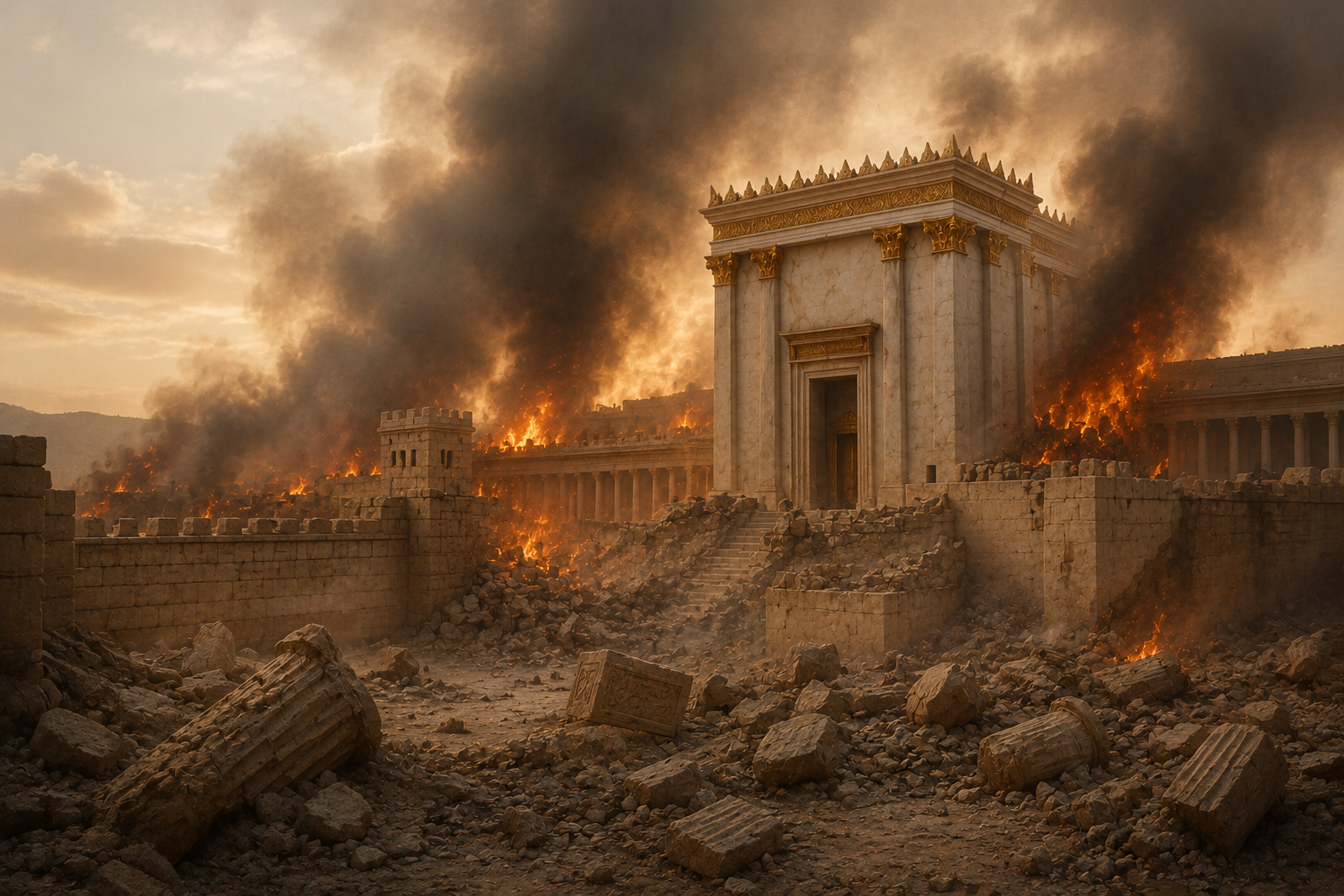
Besides the five inuyim, there are several additional restrictions observed on Tish’a BeAv that reflect the day’s mourning over the destruction of the Bet HaMikdash.
Learning Torah
One may not study sections of Torah that bring joy, which includes most areas of Torah study. Instead, one should learn subjects related to the destruction of the Bet HaMikdash, such as Eikhah, Iyov, and other passages dealing with mourning and tragedy.
This restriction remains in effect throughout the day, even after hatzot.
Learning Mussar
Studying mussar is permitted, since its purpose is to inspire a person toward teshubah rather than bring him joy.
Saying Tehillim
Reading Tehillim depends upon one’s purpose.
If a person is reading Tehillim as ordinary praise and song, it should not be recited on Tish’a BeAv. However, if one is saying Tehillim as a heartfelt prayer, crying out to Hashem during a time of distress or praying for someone who is ill, it is permitted.
The focus of Tish’a BeAv should remain on mourning the Hurban. Activities that distract a person from that focus, even spiritual ones, should generally be avoided unless they serve the purpose of prayer or teshubah.
Talit and Tefillin
The Shulhan Aruch rules that Sephardim do not wear talit and tefillin during Shaharit on Tish’a BeAv. Instead, they are worn during Minhah.
However, the custom in Yerushalayim differs. Hacham Ovadia Yosef writes that many Sephardim in Yerushalayim put on their talit and tefillin in bet kenesset. Another minhag many Sepharadim do, is put talit and tefillin at home before coming to Bet HaKnesset. They recite Birkot HaTorah and Keri’at Shema while wearing them, remove them, and then come to the Bet Knesset for Shaharit without talit and tefillin.
Greeting Others
Greeting others with the usual expressions of friendship is prohibited on Tish’a BeAv. Since we conduct ourselves as mourners, ordinary greetings such as “hello” or “good morning” should not be initiated.
If someone greets you first, however, you may respond. Although it is preferable not to engage in cheerful greetings, one should not appear rude or disrespectful. A simple acknowledgment, such as a nod or brief response, is entirely appropriate.
Working on Tish’a BeAv
The Shulhan Aruch writes that the permissibility of working on Tish’a BeAv depends upon the accepted custom of the community. In places where the custom is not to work, one should refrain from working.
Today, the accepted practice in virtually all communities is not to work during the earlier part of Tish’a BeAv.
If refraining from work would result in an actual financial loss (davar ha-aved), it is permitted to work.
Working After Hatzot
In addition, the Shulhan Aruch permits working after hatzot. Practically speaking, this means that once Minhah arrives, a person who must go to work may do so. Nevertheless, the Shulhan Aruch adds that although such work is technically permitted, one should not expect to see berachah from work performed on Tish’a BeAv.
Non-Jewish Workers
If a person employs non-Jewish workers, they may generally continue working on Tish’a BeAv. The primary exception is construction work, since it is highly visible and publicly identifies the project as belonging to a Jew.
Nahem and Anenu
During Tish’a BeAv, Sephardim recite both Nahem and Anenu in every tefillah—Arbit, Shaharit, and Minhah. Nahem is recited in the berachah of Boneh Yerushalayim, while Anenu is recited in Shema Kolenu.
The Ashkenazic custom is different. Following the ruling of the Rama, they recite Nahem only during Minhah. One explanation is that the main destruction and burning of the Bet HaMikdash intensified during the afternoon of Tish’a BeAv, making Minhah the most appropriate time to recite Nahem. Some Syrians follow this minhag also.
If You Forgot Nahem
Since Nahem is recited in Boneh Yerushalayim, many people wonder what to do if they accidentally omit it.
If you realize your mistake after completing Boneh Yerushalayim, do not return to that berachah. Instead, recite Nahem later in the Shemoneh Esreh at the place where Ya’aleh VeYavo would normally be inserted, without concluding with its closing berachah. Rather, continue directly with “Ve’atah be-ra hamekha ha-rabbim…“
If someone mistakenly inserted Nahem into Shema Kolenu, he has nevertheless fulfilled his obligation and should not repeat it in the later location.
If Nahem was omitted then, it should be recited before the second “Yihyu LeRatzon” at the conclusion of Shemoneh Esreh.
If You Forgot Anenu
If Anenu was omitted from Shema Kolenu, it should be recited before the second “Yihyu LeRatzon” at the conclusion of Shemoneh Esreh.
If a person completely forgot to say it until after finishing the tefillah, he does not repeat the Amidah.
Sitting on the Floor
The Shulhan Aruch writes that one should sit on the floor on Tish’a BeAv until the time of Minhah. Although some understand this ruling as applying specifically in Bet HaKnesset, the majority of authorities explain that it applies generally throughout the day, not only while in the synagogue.
After the Fast Ends
The exact time that the fast concludes should be checked on the local calendar.
Those who ordinarily follow Rabbeinu Tam at the conclusion of Shabbat do not need to be stringent to wait that long after Tish’a BeAv. They may rely on the earlier time, although each person should follow the guidance of his Rav.
Kiddush Levanah
There are different customs regarding when to recite Kiddush Levanah following Tish’a BeAv.
Some specifically wait until Motsa’ei Tish’a BeAv, based on tikunim that connect the rebirth of hope after the destruction with the birth of Mashiah. Others prefer to recite it earlier whenever possible, applying the principle of “zerizim makdimim le-mitzvot,” especially in places where weather conditions may prevent the opportunity later.
Those who recite Kiddush Levanah after the fast should ideally first eat something and change into regular shoes so that they perform the mitzvah in a more dignified manner and not while still hungry and dressed in the attire of mourning.
The Tenth of Av
Although the fast ends on the night following Tish’a BeAv, Sephardim continue refraining from eating meat and drinking wine until hatzot on the tenth of Av. This commemorates the fact that most of the Bet HaMikdash continued burning throughout the tenth of Av.
All other restrictions, however, end immediately after the fast. Sephardim may do laundry, bathe, receive haircuts, and resume all other normal activities as soon as Tish’a BeAv concludes.
The Ashkenazic custom is generally more stringent, continuing many of the restrictions into the following day. However, when Motsa’ei Tish’a BeAv falls on Friday, like this year, they also permit these activities in honor of Shabbat.