 Print this Article
HaRav Yishai Natan –
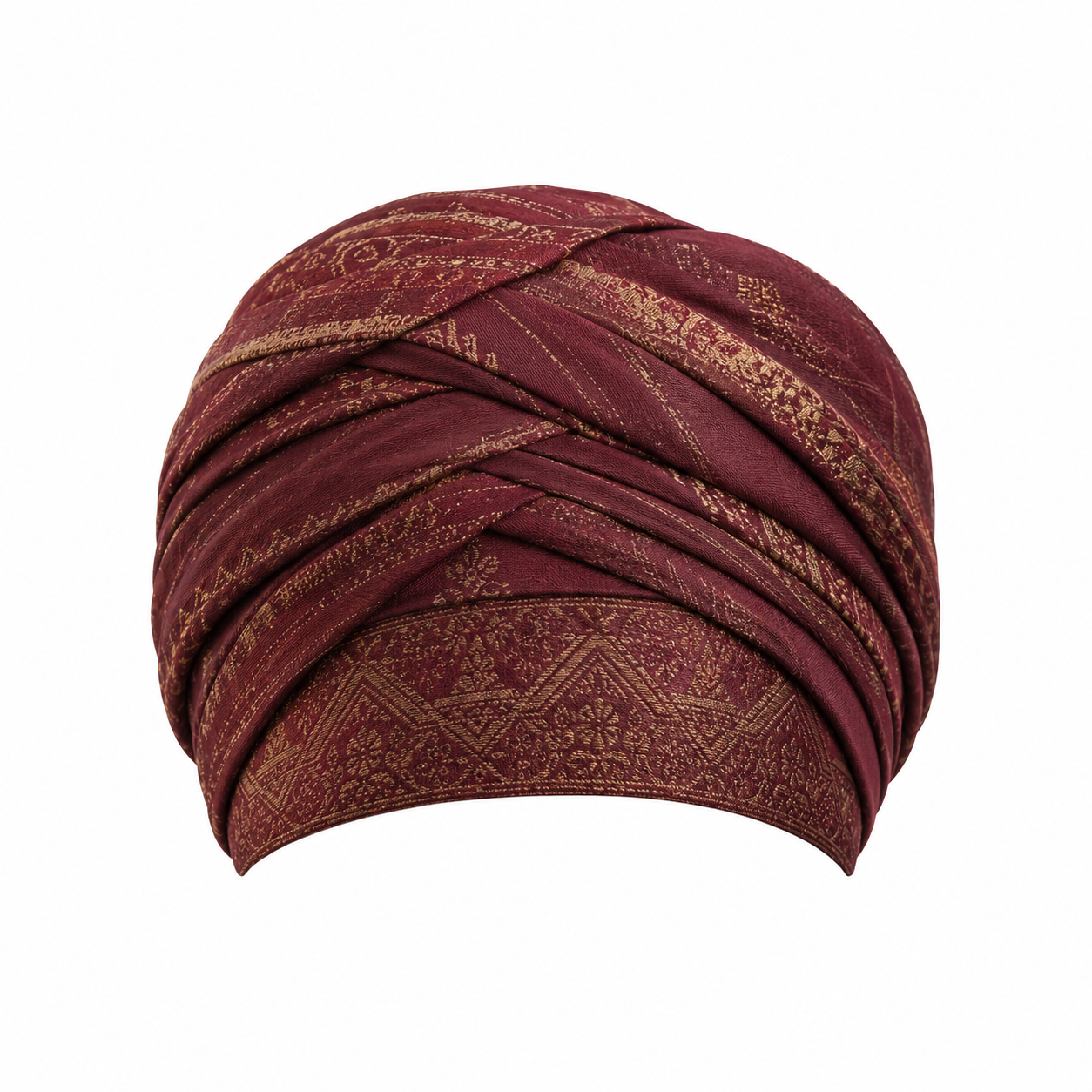
The Midrash in Parashat Korah, says that the wife of On ben Pelet saved him. On ben Pelet was originally together with Korah and his group, planning to rebel against Moshe. His wife told him, “This does not make any sense. You are going to rebel against Moshe, but you are not even going to receive any position. You will not become a Kohen, and certainly not the Kohen Gadol. If anyone becomes the leader, it will be Korah, not you.”
He answered her that it was already too late to back out. She told him, “I will take care of it.” When Korah and his people came to get On ben Pelet, she sat at the entrance of the house with her hair uncovered. When they saw her, they ran away, because they did not want to look at an uncovered woman’s hair. From here we see the concept of a married woman covering her hair.
However, this is not the real makor (foundation) for the obligation. The real makor comes from Parashat Naso, by the Sotah. The Mishnah in Ketubot (72a) says that certain women must receive a get and lose their ketubah. This includes a woman who violates Dat Moshe or Dat Yehudit.
The Mishnah asks, “Eizehu Dat Yehudit?” What is considered a violation of Dat Yehudit? The answer is: “Yotzet ve’roshah parua” — if she goes outside with her hair uncovered. The Gemara there asks: how can this be only Dat Yehudit? Uncovered hair is prohibited on a Torah level, learned from the Sotah, where the Kohen uncovers her hair. The Gemara answers that the case must be where she went out with a kalatah, meaning some type of minimal covering. But if her hair was totally uncovered, that would be an issur min HaTorah.
Issur Min HaTorah
It comes out from the Gemara that a married woman covering her hair is min HaTorah. Hacham Ovadia Yosef in Yehaveh Da’at (5:62) writes that this is correct, and that the obligation is really min HaTorah. The Mishnah Berurah (75:10) also writes that it is mamash de’oraita. This is the accepted pesak, that a married woman must cover her hair min HaTorah.
Issur MeDerabanan
There is, however, an opinion that says it is not min HaTorah. The Terumat HaDeshen (242) holds that the obligation is only derabbanan. Even though the Gemara uses the language of de’oraita, there are many times that the Gemara says something is de’oraita even though it is not literally a Torah prohibition. Hacham Ovadia in Yehaveh Da’at agrees that the Gemara itself is not an absolute proof that it is min HaTorah, but since many Rishonim understand it that way, the accepted halacha is that it is de’oraita. The Terumat HaDeshen is the main opinion that holds it is only derabbanan, but this is not the accepted halacha.
The Minhag approach
There is also a third approach, which says that it is not really min HaTorah or even derabbanan, but rather a matter of minhag and tzeniut (modesty). This was the approach of Rav Ovadia Hadayah from Allepo, who served as Av Bet Din in Yerushalayim. In his teshuvah in Yaskil Avdi, he was trying to be melamed zehut on women who did not cover their hair, since this had become very common in Eretz Yisrael at that time. He writes that once many women no longer covered their hair, it was no longer considered outside the normal standard of tzeniut, because the practice depends on the accepted minhag.
Rav Yosef Meshash, who was from Morocco and later served as rav harashi in Haifa, wrote similarly. He says that in earlier generations everyone covered their hair, and it was considered very improper not to. But then many people came from Poland, where even religious families did not cover their hair. When they came to Eretz Yisrael, they continued that practice, and then many Sepharadim also began not covering their hair. He writes that they tried to tell the women that they must cover their hair, but they did not listen. Once it became common for women not to cover their hair, he held that it was no longer considered against tzeniut, and therefore he was also melamed zehut.
So there are really three levels: one opinion says it is de’oraita, one says it is derabbanan, and one says it depends on minhag and tzeniut. However, this last approach is mainly a limud zehut and is not the accepted halacha. Hacham Ovadia Yosef in Yabia Omer (3:21) writes very strongly against the Yaskil Avdi and says that this whole approach, that hair covering is only based on minhag, is not correct. The accepted pesak is that a married woman covering her hair is de’oraita.
Single Girls, Divorcees, and Widows
However, this applies only to married women. A single girl does not have to cover her hair. The issue is that the Shulhan Aruch, Even HaEzer 21:2, writes that even a penuyah, unmarried girl must cover her hair.
Hacham Ovadia explains in Yehaveh Da’at (5:62), that the Shulhan Aruch is not talking about a regular single girl who was never married. Rather, he is talking about a woman who was married and is now single, such as a divorcee or widow. That is also called a penuyah. A girl who was never married does not have to cover her hair. This is the accepted pesak: regular single girls do not have to cover their hair, but divorced women and almanot do.
Covering the Head for Tefillah and Haskarat Hashem
There is another discussion regarding single girls when they say Hashem’s Name, meaning during tefillah, berachot, or learning. The Shulhan Aruch in Orah Haim 95:5 writes that one should not mention Hashem’s Name with an uncovered head. He does not clearly differentiate between men and women. Therefore, Hacham Ovadia (Yehaveh da’at 5:6) writes that this applies to both men and women. In theory, even girls should cover their heads when saying Hashem’s Name.
However, he notes that in Bet Yaakov schools and girls’ schools, this was generally not enforced, and girls prayed without head coverings. He writes that where it is possible to enforce it, it is proper for girls to cover their heads during tefillah. Still, it seems that he was not extremely strict about this in practice. Among Ashkenazim, the common minhag is that single girls do not cover their heads even for haskarat Hashem. But according to Hacham Ovadia and Or LeTziyon, it is proper to be mahmir for single girls to cover their heads when praying or saying Hashem’s Name.
Married Women During Tefillah and Berachot
For married women, however, this is not a mahloket. A married woman must cover her hair when she prays or says Hashem’s Name. Many people do not know this. The Ben Ish Hai, in Parashat Shemini, writes that even when a woman is immerses in the mikveh, when she makes the berachah, she should cover her head. This is not the common minhag, but it shows how serious the matter is.
Covering Hair Inside the House
Now, does a married woman have to cover her hair inside her own house, or only when she is around other people? Tosafot in Ketubot 72b writes clearly that in her own hatzer, she does not have to cover her hair. If she does not have to cover it in her yard, then certainly in her house she would not have to cover it.
On the other hand, the Gemara in Yoma 47a tells us about Kimhit, who had seven sons who all served as Kohen Gadol in the Bet Hamikdash. Why did she merit such a thing? She answered that the walls of her house never saw her hair.
However, Darkeh Moshe and Taz (Even HaEzer 115:5), and Yalkut Yosef (Dinei Nashim 788), write that this is only a humrah. No one says that min hadin a woman must cover her hair inside her own house. It is a very good humrah, and if a woman is able to do it, it is praiseworthy. But min hadin, we follow Tosafot in Ketubot, that she does not have to cover her hair in her own home.
The Question of Shaitels
Now we come to shaitels. We are not discussing lace tops, but shaitels in general, as opposed to covering the hair with a hat or scarf.
It is well known that Hacham Ovadia Yosef held that wearing a shaitel is asur gamur. He gives three main reasons.
Reasons for issur
First, he brings a Yerushalmi that says a woman with roshah parua is one who goes out with a kaplatin. He brings the Aruch, who explains that kaplatin means a wig. According to this, the Yerushalmi clearly says that a shaitel is not a valid hair covering.
Second, he says that the whole point of covering the hair is that the woman should not look so attractive to others, only to her husband. If she wears a shaitel and now looks even prettier, what was the point of the hair covering?
Third, he says there is a problem of mareit ayin, because people may think it is her real hair and that she is not covering her hair at all.
These are the three main arguments of Hacham Ovadia. Rav Yitzhak Yosef also speaks about this in a few places, including Yalkut Yosef (Dineh Nashim 776). He brings many poskim who prohibit wearing a shaitel, and he wants to say that even those who allowed it in earlier generations would prohibit it nowadays, since modern shaitels look much more natural.
Answering the Arguments
However, there are answers to these three arguments.
Regarding the first argument from the Yerushalmi, the word kaplatin does not necessarily mean a shaitel. The Aruch explains it that way, but other Rishonim explain it differently. Therefore, it is not explicit in the Yerushalmi that a shaitel is forbidden.
Regarding the second argument, that a shaitel makes her look prettier, this depends on the reason for covering hair. If the reason is that a married woman should not look beautiful to others, then this argument is strong. But if the reason is that her natural attached hair is considered an ervah and must be covered, then once she covers her natural hair, she has fulfilled the requirement. Where do we see that the Torah’s reason is that she may not look pretty? It could be that the Torah only requires her actual hair to be covered.
Regarding the third argument of mareit ayin, that people may think it is her real hair, one can answer that women can usually tell what is a shaitel and what is not. Men often cannot tell, but that is not necessarily the determining factor. Mareit ayin usually applies when something clearly looks like a prohibited act, maybe like eating a “cheese”burger. But here, since a shaitel is often recognizable to those who understand it, and since there is no reason to assume that she is not covering her hair, and the fact that its normal, there may not be a real problem of mareit ayin. (see Ohr Yitzhak, Even HaEzer 3). Rav Moshe Sternbuch, in Sefer Dat Yehudit, writes that in some ways a shaitel may even be better, because a hat or scarf may not cover all the hair, and some hair can still be visible. A shaitel, on the other hand, covers all the hair completely, so he writes that it can actually be preferable in that sense.