 Print this Article
HaRav Yishai Natan –
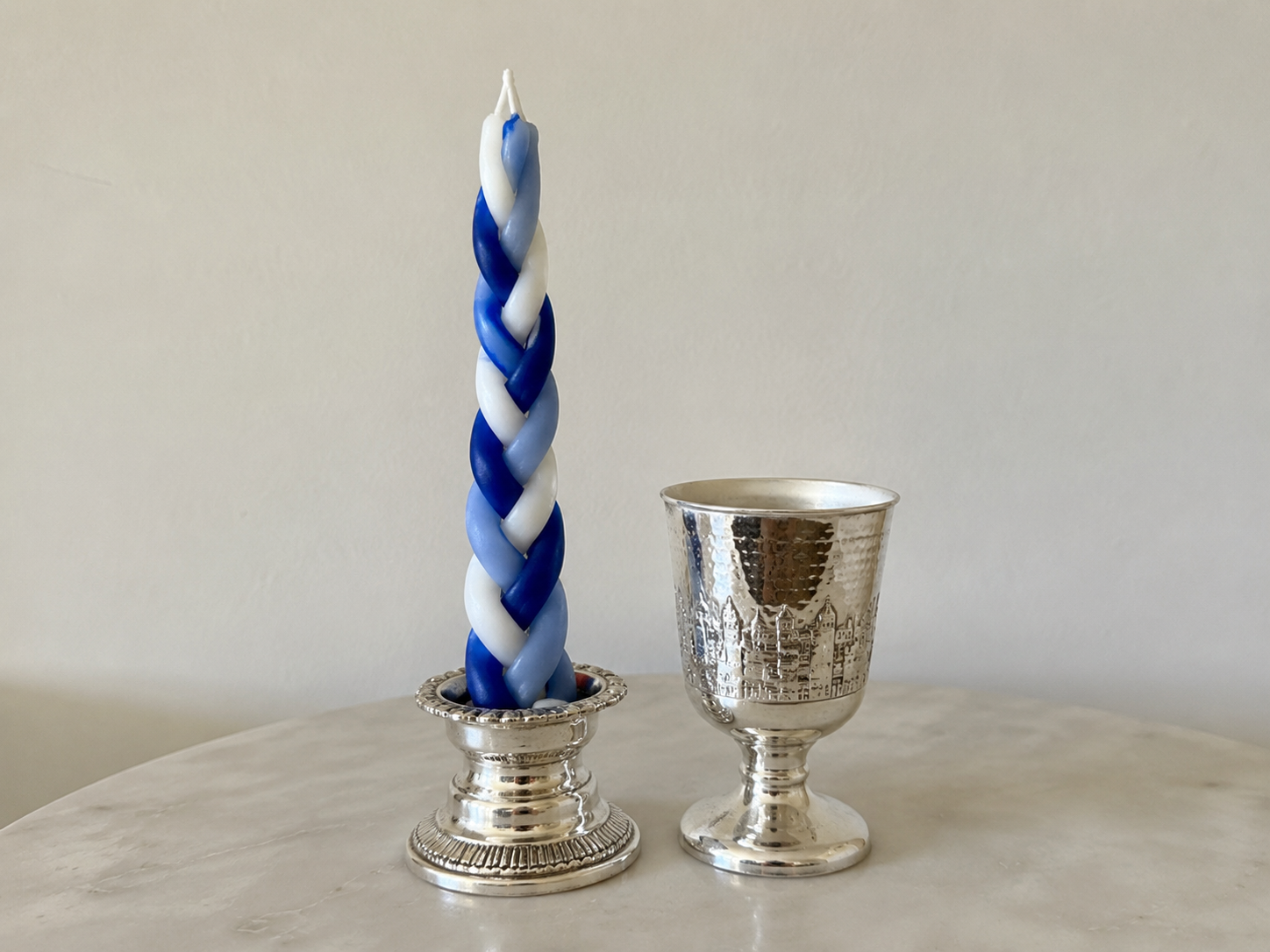
The daughters of Selofhad had no brothers, and they wanted a portion in Eres Yisrael. They were not just looking for a nice apartment or a comfortable place to live. They wanted a portion in the land so they could fulfill the Mitzvah properly, with kavanah leshem Shamayim. Many times, women also have a strong desire to perform Misvot. They see men sitting in the Sukkah or shaking the Lulav, and they also want to participate and make a beracha. The question is whether they may do so when the Mitzvah is a Mitzvat Aseh Shehazeman Gerama, a positive time-bound Mitzvah, from which women are usually exempt.
The Two Opinions in the Bet Yosef
The Bet Yosef (Orah Hayim 296:8) discusses if women may say Havdalah in. This discussion is not found in the Tur itself, but the Bet Yosef brings two opinions. The first opinion is the Orhot Hayim, who writes that women cannot make Havdalah. His reasoning is that Havdalah is not considered part of Shabbat itself. Rather, it is a separate Mitzvah Derabbanan that Hazal established to be done after Shabbat. Since it is a time-bound Mitzvah, women would not be obligated.
The second opinion is Rabbenu Yonah, who says that women are obligated in Havdalah. According to him, Havdalah is part of the Mitzvah of Shabbat. Just as women are obligated in Kiddush, so too they are obligated in Havdalah. The Gemara teaches that whoever is obligated in “shamor,” the negative commandments of Shabbat, is also obligated in “zachor,” the positive Mitzvah of sanctifying Shabbat. Therefore, even though Kiddush is a time-bound positive Mitzvah, women are obligated because it is part of Shabbat as a whole. Rabbenu Yonah says the same applies to Havdalah (Berachot 20b; Bet Yosef, Orah Hayim 296:8).
The basic question, then, is whether Havdalah is part of Shabbat or not. The Orhot Hayim holds that it is not part of Shabbat, but rather a separate Rabbinic Mitzvah. Therefore, women are not obligated. Rabbenu Yonah holds that it is part of Shabbat and is a regular mitzva de’oraita, and therefore women are obligated.
The Ruling of Maran
Maran rules in Shulhan Aruch using the format of Stam VaYesh. First, he brings the opinion that women are obligated in Havdalah, like Rabbenu Yonah. Then he brings a second opinion that women are not obligated. The rule is Stam VaYesh Halachah KeStam, meaning that when Maran first brings one opinion plainly and then brings another opinion as “some say,” the Halachah follows the first opinion. Therefore, according to Maran, women are obligated in Havdalah (Shulhan Aruch, Orah Hayim 296:8).
The Rama writes that since there is a dispute, it is better for a woman not to make Havdalah herself. Instead, a man should make Havdalah and be mosi her. If we would stop here, the issue would seem simple. For Sepharadim, since Maran rules that women are obligated, they could make Havdalah. For Ashkenazim, since the Rama says to be strict, they should preferably hear Havdalah from a man.
The Problem of Safek Berachot
However, the issue becomes more complicated because this question involves berachot. Usually, regarding berachot, we are very strict with the rule of safek berachot lehakel, meaning that when there is a doubt whether a berachah should be recited, we do not recite it. In addition, there is a rule of safek berachot lehakel afilu keneged Maran, meaning that even when Maran rules to make a berachah, if there is a doubt, we are still careful not to make the berachah. Based on that, one might argue that even Sepharadim should follow the stringency of the Rama and not allow a woman to make Havdalah with the berachot.
The Questions on the Rama
The Bah asks on the Rama: Why should this be a problem for Ashkenazim? Ashkenazim hold that women may make a berachah on Misvot from which they are exempt, such as sitting in the Sukkah or shaking the Lulav. Therefore, even if women are not obligated in Havdalah, why can’t they make the berachah anyway, just like they make a berachah on other time-bound Misvot?
There are two main answers to explain the Rama. The first is the approach of the Magen Avraham. He suggests that maybe Havdalah is worse than Lulav and Sukkah, because by Lulav and Sukkah there is an action. A woman sits in the Sukkah or shakes the Lulav. By Havdalah, however, there may be no real action, only the recitation of the berachah. Perhaps women may only make a berachah on a Misvah they are not obligated in when there is a physical action involved.
However, the Magen Avraham himself rejects this distinction. He brings from the Rosh that women may recite the berachah of redemption in the Haggadah on Pesah, even though that berachah is also not connected to a specific physical action. Therefore, the Magen Avraham agrees with the Bah that according to Ashkenazic practice, women may make Havdalah for themselves (Magen Avraham, Orah Hayim 296:11).
The Taz gives a different explanation. He says that the Rama is strict by Havdalah because the beracha is on Havdalah which is only Derabbanan. By Lulav and Sukkah, the Mitzvah itself is from the Torah. The Taz therefore holds that women should not recite the berachah like the Rama (Taz, Orah Hayim 296:7).
The Aruch HaShulhan asks on the Taz: Women make a berachah on Lulav even on the second day and the other days of Sukkot, when the obligation is only Rabbinic. If women may make a berachah on a Rabbinic Lulav, why should Havdalah be different? (Aruch HaShulhan, Orah Hayim 296:5).
Hacham Ovadia Yosef answers this question. He explains that Lulav at least has a Torah source, because the first day of Sukkot is a Torah obligation. Therefore, the later Rabbinic days are connected to a Mitzvah that has a Torah root. Havdalah, however, according to the opinion of the Orhot Hayim, is entirely Rabbinic and does not have the same Torah source. Therefore, the Taz can still argue that women should not make the berachah according to that opinion (Yabia Omer, vol. 4, Orah Hayim 23).
Why Hacham Ovadia Allows It
Still, Hacham Ovadia concludes that Sephardic women may make Havdalah with the berachot. He builds this ruling on several points. First, many Rishonim hold like Rabbenu Yonah that Havdalah is connected to Shabbat, and women are obligated. Second, even if Havdalah is Rabbinic, one can still argue that Hazal established it in the same structure as the Torah obligation of Shabbat, based on the rule of kol detikkun Rabbanan ke’en de’Oraita tikkun. Therefore, since women are included in the Torah obligation of Shabbat, they are included in the Rabbinic structure of Havdalah as well. Third, some hold that women may make berachot on Misvot Aseh Shehazeman Gerama. Although Sepharadim do not usually rely on that for themselves, it still becomes another point to combine in this case.
Finally, he brings from the Ben Ish Hai and the Zivhei Sedek that in Baghdad the custom was that women did make Havdalah. When there is a clear minhag, especially a minhag that existed before or alongside the rulings being discussed, that can help override the concern of safek berachot lehakel. Based on all of this, Hacham Ovadia rules that women may make Havdalah with the regular berachot (Yabia Omer, vol. 4, Orah Hayim 23; Ben Ish Hai, second year, Vayese 22; Zivhei Sedek, vol. 3, 143).
The Kaf HaHayim, however, is stricter. He writes that women should say Havdalah without Shem UMalchut, meaning without saying Hashem’s Name in the full form of the berachah. However, the accepted minhag among many Sepharadim follows the Ben Ish Hai and Hacham Ovadia, that women may say the full Havdalah when needed (Kaf HaHayim, Orah Hayim 296:54).
The Berachah on Fire
There is another possible issue: the berachah of Boreh Me’orei Ha’esh. The berachah on besamim is not a problem, because it is a regular Birkat HaNehenin. A person may smell pleasant spices and recite Boreh Minei Besamim whenever he wants. The berachah on fire is different. It was specifically established for Mosa’ei Shabbat, because fire was first created for human use on Mosa’ei Shabbat. Therefore, one could argue that Boreh Me’orei Ha’esh is time-bound and not fully part of Havdalah. In fact, if a person cannot make Havdalah, he may still recite Boreh Me’orei Ha’esh when seeing a flame on Mosa’ei Shabbat. This shows that it has its own independent identity (Pesahim 54a; Shulhan Aruch, Orah Hayim 298:1).
Nevertheless, Hacham Ovadia writes that since Hazal placed Boreh Me’orei Ha’esh into the order of Havdalah, it is treated as part of the Havdalah service. Therefore, just as a woman may say Havdalah, she may also recite Boreh Me’orei Ha’esh (Yabia Omer, vol. 4, Orah Hayim 24). The Mishnah Berurah is unsure about this berachah, but Hacham Ovadia rules clearly that women may say it (Mishnah Berurah, 296:35; Biur Halachah, 296:8 s.v. lo yavdilu le’asmam; Yabia Omer, vol. 4, Orah Hayim 24).
Interestingly, the Kaf HaHayim takes the opposite approach. He is strict regarding the main Havdalah berachah, but he writes that women may say Boreh Me’orei Ha’esh with Shem UMalchut. In other words, according to him, the berachah on fire is less problematic than the main Havdalah berachah (Kaf HaHayim, Orah Hayim 296:54; 298:22).
Drinking from the Kos Havdalah
The final issue is drinking from the kos Havdalah. The Magen Avraham brings from the Shelah that women have a custom not to drink from the kos Havdalah. One reason given is connected to Havah, who brought death into the world by eating from the Etz HaDa’at. Since some opinions say the fruit of the Etz HaDa’at was grapes, women refrain from drinking the wine of Havdalah. There are other reasons mentioned as well. Some people say that if women drink from the kos Havdalah, they will grow facial hair or chest hair, but this is not a reason found in the Poskim (Magen Avraham, Orah Hayim 296:4; Shelah, Masechet Shabbat, Ner Mitzvah).
The Mishnah Berurah says that according to the Magen Avraham and the Bah, women may make the main Havdalah berachah, since Ashkenazim allow women to make berachot even on Misvot Aseh Shehazeman Gerama. However, he remains unsure about Boreh Me’orei Ha’esh. He also writes that since women have the custom not to drink from the cup, it is better that they should not make Havdalah themselves when possible (Mishnah Berurah, 296:35; Biur Halachah, 296:8).
The Aruch HaShulhan and Hacham Ovadia both explain that the custom not to drink from the kos Havdalah is only a custom. It is not a real prohibition and not even a strong humrah. Therefore, if a woman needs to make Havdalah, such as when her husband is not home, she may make Havdalah and drink from the cup. It would not make sense to say that she should lose the Mitzvah of Havdalah because of a custom not to drink from the cup (Aruch HaShulhan, Orah Hayim 296:6; Yabia Omer, vol. 4, Orah Hayim 23).
When the Husband Hears Havdalah in Bet Knesset
However, Hacham Ovadia writes very strongly that if the husband is in Bet Knesset and they are making Havdalah there, he should have specific kavanah not to be yose with that Havdalah. This way, he can return home and make Havdalah for his wife and family. By Kiddush, even if he already fulfilled his own obligation, he can still make Kiddush for others. But by Havdalah, since there is an opinion that women are not obligated, it is not so simple for him to be mosi her after he already fulfilled his own obligation. Therefore, he should listen in Bet Knesset without intending to fulfill his obligation, and then make Havdalah at home (Yabia Omer, vol. 4, Orah Hayim 23).
Practical Conclusion
Practically, according to Maran, the Ben Ish Hai, and Hacham Ovadia Yosef, Sephardic women may make Havdalah with all the regular berachot, including Boreh Me’orei Ha’esh, and they may drink from the cup when needed. If the husband is home, it is better for him to make Havdalah for the household. If he hears Havdalah in Bet Knesset, he should have kavanah not to be yose, so that he can make Havdalah properly at home.