 Print this Article
חג השבועות –
HaRav Yishai Natan –
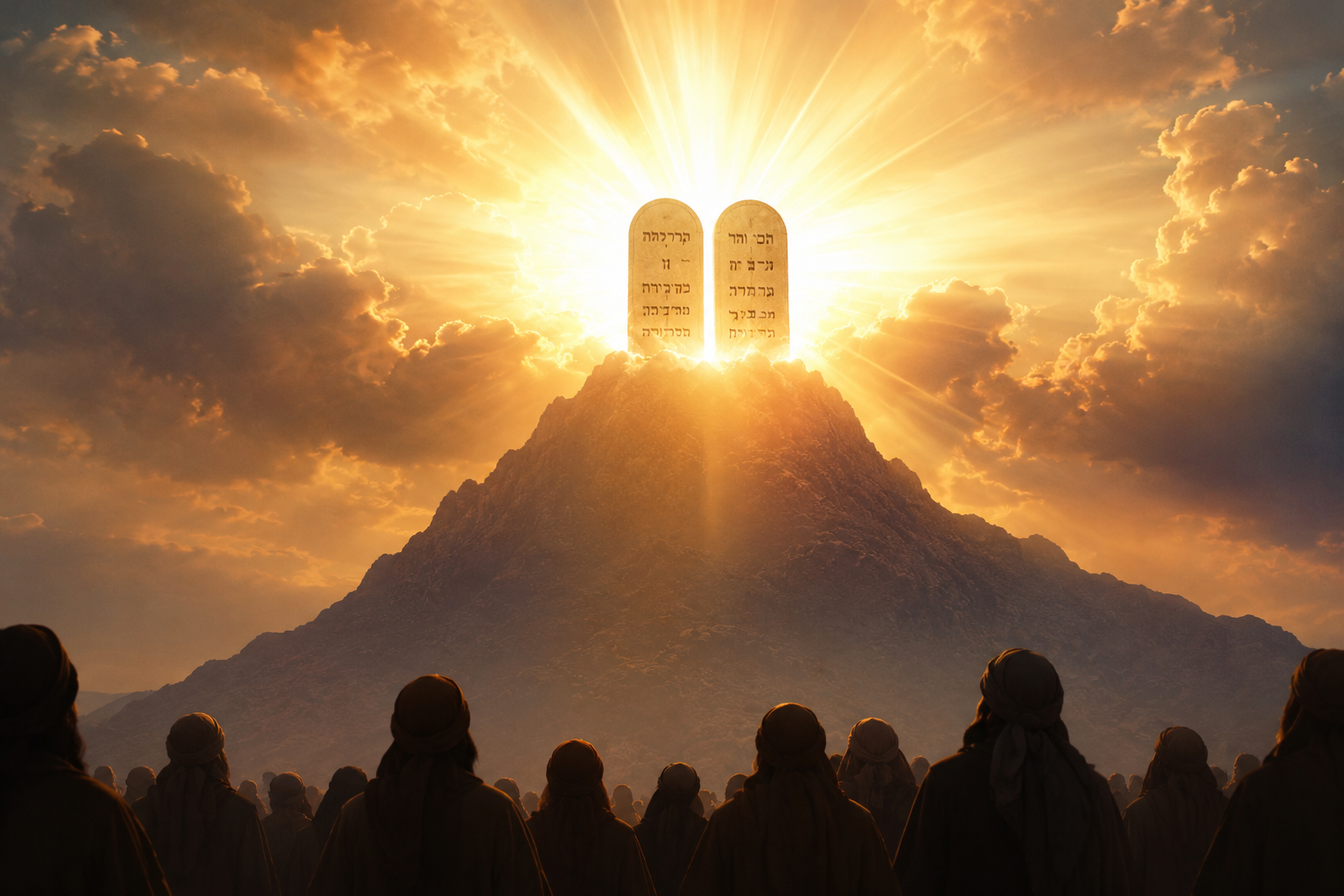
There aren’t many unique mitzvot associated specifically with Shavuot. There’s no mitzvah of eating matzah, no sukkah, and no other specific actions unique to the holiday. Eating Cheescake is not a mitzva. The only unique mitzvah of Shavuot is simchah, rejoicing on the Yom Tov. Still, we are going to discuss some of the practices and halachot that pertain to Shavuot.
Making an Early Shavuot
First, let’s begin with Erev Shavuot.
Can a person make an early Shavuot? Just as people make an early Shabbat, can they also make Yom Tov early on Shavuot? It would seem that it should be fine.
However, the Mishnah Berurah brings from the poskim that we do not make Shavuot early because the pasuk says: “שבע שבתות תמימות תהיינה” — the seven weeks (the counting of 49 days) must be complete. Therefore, if one accepts Shavuot before tzet hakochavim, it would come out that the counting of the forty-nine days was not complete.
But if you look carefully in the poskim, this does not necessarily mean that one cannot pray Arvit before tzet hakochavim. The issue discussed by the poskim is specifically making Kiddush before tzet hakochavim. The language used is: “אין מקדשין על הכוס עד צאת כוכבים” — one should not recite Kiddush until nightfall.
So, according to many poskim, one may pray Arvit earlier, even from plag haminchah, but Kiddush should only be made after tzet hakochavim. Practically, if a minyan begins somewhat early, by the time everyone finishes praying and gets home, it will already be well after nightfall.
Decorating with Flowers
There is also a minhag to decorate the Bet Kenesset and homes with flowers and greenery on Shavuot. This minhag is brought in the Rama and the Mishnah Berurah, and some Sephardim observe it as well. One reason given is that Har Sinai blossomed and was filled with fragrance at the time of Matan Torah.
However, the Vilna Gaon opposed this minhag because he felt it resembled the practices of non-Jews during their holidays, which could fall under the prohibition of “חוקות הגויים.” Still, Chacham Dovid Yosef Shlit’’a explains that merely doing something that non-Jews also do does not automatically make it prohibited. Chukot hagoyim refers to customs without reason that are adopted. But when Jews decorate with flowers for kavod Yom Tov, simchah, or remembrance of Har Sinai, there is a meaningful reason behind the practice, and therefore is permitted.
Staying Awake on Shavuot Night
Another well-known minhag is staying awake the entire night of Shavuot learning Torah. This is brought from the Zohar, that early chassidim would remain awake all night. The Arizal writes that one who stays awake all night learning Torah is promised protection throughout the year.
The question becomes: What should one learn?
Many poskim, including the Pri Megadim, Chida, Ben Ish Chai, Kaf HaChaim, and Ohr LeTzion, write that one should specifically learn the Tikkun Leil Shavuot. There is a special tikkun associated with the night, and therefore they encouraged following the established text of the tikkun. Even someone who enjoys learning Gemara more should ideally complete the tikkun first.
On the other hand, Chacham Ovadia Yosef and Rav Yitzchak Yosef explain that the main point is to remain engaged in Torah learning. Therefore, if a person will learn better and stay awake more effectively by learning Gemara or another subject that he enjoys, then “תבא עליו ברכה” – he will receive blessings.
There is a little debate regarding what was done in the yeshivah of Chacham Ovadia Yosef. Rav David Yosef described that they would learn the tikkun until chatzot, recite Shema, and then continue with shiurim and other learning until alot hashachar when they would split up the Zohar between a lot of people before Tefilla. Rav Yitzchak Yosef described the opposite order. Shiur till Chatzot and then tikkun till alot hashachar. In any case, the essential point is to remain involved in Torah learning throughout the night and avoid idle conversation.
Netilat Yadayim After Staying Awake All Night
Now we move to the halachot of the morning after staying awake all night.
Regarding Netilat Yadayim, the Rishonim give different reasons for the morning washing:
- The Rashba explains that every morning a person is considered like a new creation, and therefore requires washing similar to a kohen beginning the avodah.
- The Rosh explains that a person’s hands touch covered areas during sleep, making them unclean for prayer. Washing for Tefilla is a mitzva and requires a beracha.
- The Zohar associates the washing with removing ruach tumah.
If someone remained awake all night, these reasons become subject to debate. According to the Rashba, one may still require washing because Chazal established the enactment for every morning and therefore would require a beracha. According to the Rosh, there is no obligation to wash because the person never slept and his hands are clean. According to the Zohar, there is uncertainty whether ruach tumah comes from sleep itself or simply from the arrival of morning and therefore it is uncertain if one should wash with a beracha.
Therefore, many rule that one should wash without a berachah because of safek berachot lehakel. This is the ruling of Chacham Ovadia Yosef and Rav Yitzchak Yosef in the Yalkut Yosef. However, Rav David Yosef holds that if a person dozed off even briefly (more than one minute), he may recite the berachah.
The Mishna Berura says that if one uses the restroom before he washes, then also according to the Rosh he will be obligated in washing since his hands are unclean and would therefore be able to make a beracha according to both the Rashba and Rosh, and that’s what should be done.
Asher Yatzar
As for Asher Yatzar, some hold that one can recite this beracha even without using the restroom, and some argue. The simplest solution is to use the restroom before Shacharit and then recite the berachah afterward.
Birkat HaTorah
Birkat HaTorah is more complicated.
The Rosh holds that the obligation for Birkat HaTorah is connected to sleep. Therefore, every time a person sleeps a significant sleep, even during the daytime, he must recite Birkat HaTorah again.
Rabbeinu Tam, however, holds that Birkat HaTorah is tied to the arrival of a new day. According to him, once alot hashachar arrives, one recites Birkat HaTorah even if he never slept.
The Shulchan Aruch (OH 47:11) discusses these opinions and says if one sleeps during the day he should not make the berachot, proving that he does not follow the Rosh. But he also says there that if one wakes in the middle of the night he should recite the berachot, which does follow the Rosh and not Rabbeinu Tam. It’s clear in the Bet Yosef that he holds like the Agur, a third opinion that is like the Rosh, but differentiates between daytime sleep and nighttime sleep.
Maran, in Shulchan Aruch does not clearly state what should be done when someone stays awake the entire night. This led to significant debate among later poskim, and should lean itself to say Safek Berachot Lahakel and not to make the berachot.
However, Sephardic custom, established long before the Beit Yosef, is that one who remained awake all night does recite Birkat HaTorah in the morning. The Sephardic poskim explain that established minhag overrides the general principle of safek berachot lehakel in this case and one should recite all the berachot, as well as the Birkot HaShachar which is also a debate, but ultimately, Sephardic custom prevails to recite them privately. Not like the Ashkenazi custom which is to have one guy who slept make the berachot for everyone and they answer amen.