 Print this Article
Rabbi Yishai Natan –
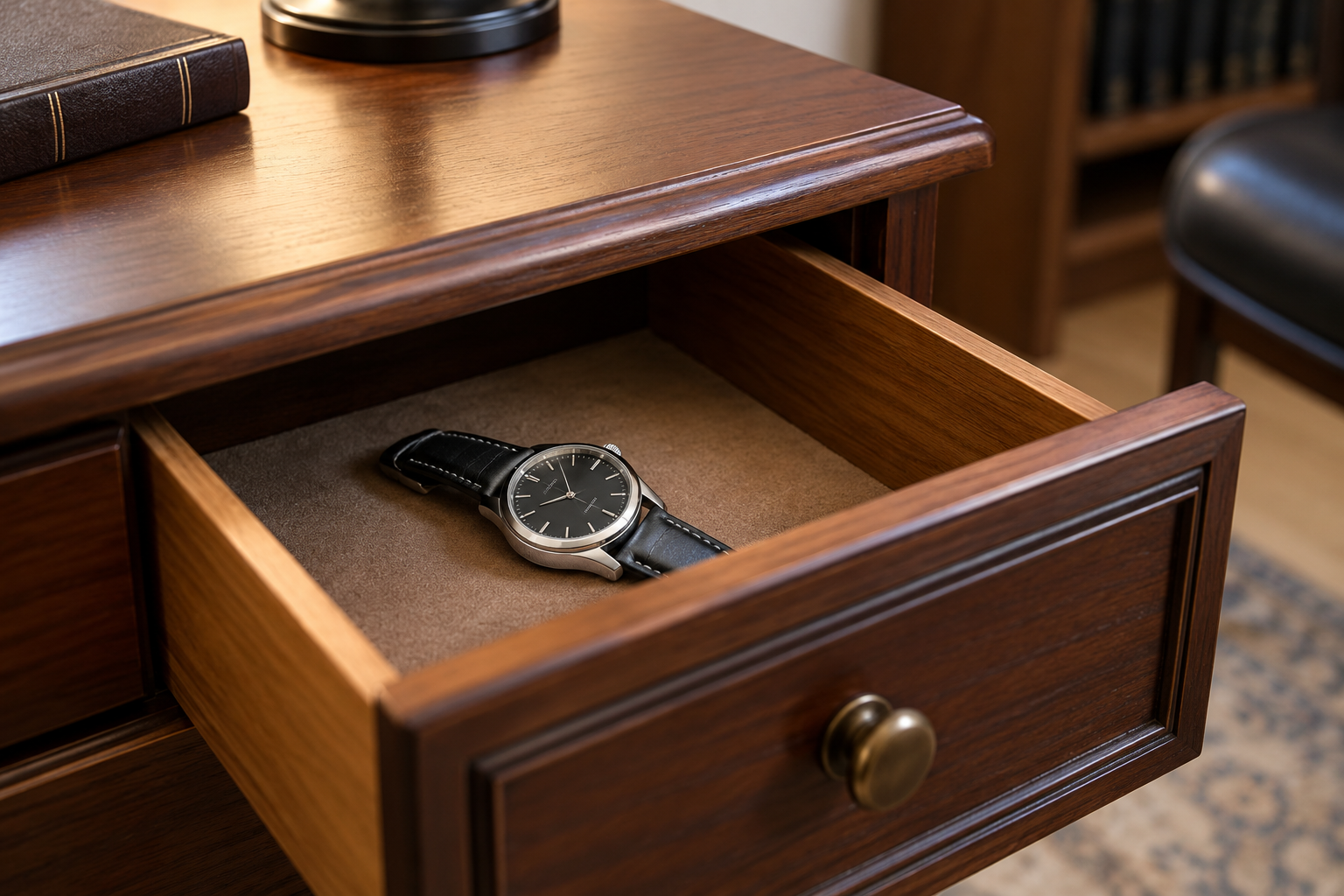
Someone forgot his nice watch in the bet kenesset, and it had been sitting there for a few days. I asked around to see if anyone knew who it belonged to, and someone told me who the owner was. I was afraid the watch might get taken, so I brought it home. I texted the owner and told him that I had his watch. He replied that he would come pick it up sometime soon. A week passed, and when he finally came to get it, I went to my study and opened the drawer where I remembered putting it, but the watch was not there. I searched everywhere, asked my family, and even called guests who had been in my house to see if someone had taken it by mistake. No one knows where it is.
Am I obligated to pay for the missing watch?
A Shomer Who Cannot Find the Item
When you took the watch home, you became a shomer responsible for guarding it. Maran writes in Shulhan Aruch (Hoshen Mishpat 291:7) that if the owner comes to collect his item and the shomer says, “I do not remember where I put it,” the shomer is considered negligent and is hayav to pay. The Netivot HaMishpat goes even further and considers him a mazik. Since he placed the item somewhere that only he knew about and now does not remember where it is, he is viewed as having actively caused the loss.[1]
Your case, however, appears to be different. If you truly had no memory of where you placed the watch, you could be hayav, either as a shomer or a mazik. Here, you remember putting it in your study. You are only second-guessing yourself because it is no longer there. Therefore, this does not seem to fall under the case discussed by Maran.[2]
Was It Properly Guarded?
If you were negligent in guarding the watch, you would be hayav. However, keeping it inside your locked home, in your study, in your drawer, seems to be a normal and reasonable way to guard it. The fact that guests sometimes enter your home would not automatically make this negligent. This is a normal place where you would keep your own valuable belongings, even when guests are present. Therefore, the watch appears to have been properly guarded.
Shomer Hinam or Shomer Sachar?
Since you are not getting paid, one might think you are considered a shomer hinam, an unpaid guardian, who is only hayav for negligence. However, the Gemara (Bava Kama 56b) records a mahloket regarding someone who finds a lost object. Rabbah holds that he is only a shomer hinam and is hayav only for negligence. Rav Yosef holds that he becomes a shomer sachar, a paid guardian, and is therefore hayav if the item is lost or stolen.
Maran[3] rules like Rav Yosef, while the Rama rules like Rabbah. We do not say kim li against Maran, so you cannot simply follow the Rama to exempt yourself.[4] Therefore, according to Maran, you would be a shomer sachar and hayav since the watch is considered lost or stolen.
Perutah DeRav Yosef
There is, however, an important reason to say that you may still be patur. One explanation for Rav Yosef’s opinion is known as perutah deRav Yosef. While someone is busy taking care of a lost object, he is performing a mitzvah. If a poor person asks him for tzedakah at that moment, he is exempt from giving even a perutah. Since the finder receives this small financial benefit, he is considered a shomer sachar.[5]
Some Poskim say that this benefit only applies when the lost object actually requires care.[6] For example, if the item is a beged, the finder may need to unfold it and air it out occasionally so that it does not become damaged. A regular battery-powered watch, however, does not require this type of care. Therefore, according to these Poskim, the finder never receives the benefit of perutah deRav Yosef. According to this approach, even Maran could agree that you are only a shomer hinam and would be patur.
The Gemara gives another explanation for Rav Yosef: since the Torah commands the finder to guard the lost object, that responsibility itself makes him a shomer sachar. According to this explanation, you would still be hayav. However, it is unclear which reason Maran follows, since he does not bring the reasoning of the Gemara. Additionally, the Sema (ibid.) only brings the first explanation of perutah deRav Yosef, giving more room to be lenient.
You Already Notified the Owner
There is an additional reason to say that you are patur. Once you informed the owner that you had his watch, it became his responsibility to come pick it up.[7] Since he did not come immediately, your special obligation as a shomer aveidah ended. You then became just a regular shomer hinam, who is only hayav for negligence.[8]
Conclusion
The way you guarded the watch does not appear to be negligent. You remember placing it in your study inside your locked home, which is a normal way to guard a valuable item. Although Maran generally considers someone who finds a lost object a shomer sachar, there are two strong reasons to be lenient here. First, a regular battery-powered watch does not require ongoing care, so the reasoning of perutah deRav Yosef may not apply. Second, once you informed the owner that you had his watch and he said he would pick it up, you became a regular shomer hinam. Therefore, since you were not negligent, you are patur from paying. However, you should still continue looking for the watch in case you did misplace it.
[1] One practical difference would be ba’alav imo: an exemption that could make a shomer patur would not help if he is considered a mazik.
[2] See Meiri (Bava Metzia 42a); Talmid HaRashba (Shitat HaKadmonim, Bava Metzia 42a); and Ba’al HaItur (80, Pikadon, 71b).
[3] Shulhan Aruch, Hoshen Mishpat 267:16.
[4] Furthermore, Maran writes in the Bet Yosef that most of the Rishonim, including the Rosh, rule like Rav Yosef. Although the Tur and Rama understood that the Rosh ruled like Rabbah, Maran understood the Rosh differently.
[5] Rabbah disagrees because it is uncommon for a poor person to arrive at the exact time the finder is busy caring for the object (Sema 267:16).
[6] Noda BiYehudah (Mahadura Tinyana, Hoshen Mishpat 54) and see Sema (267:16).
[7] Pit’hei Hoshen, Aveidah, 7:2.
[8] However, if the owner was unable to come pick it up, you would retain your status as a shomer sachar until he was able to collect it.