 Print this Article
Rabbi Yishai Natan:
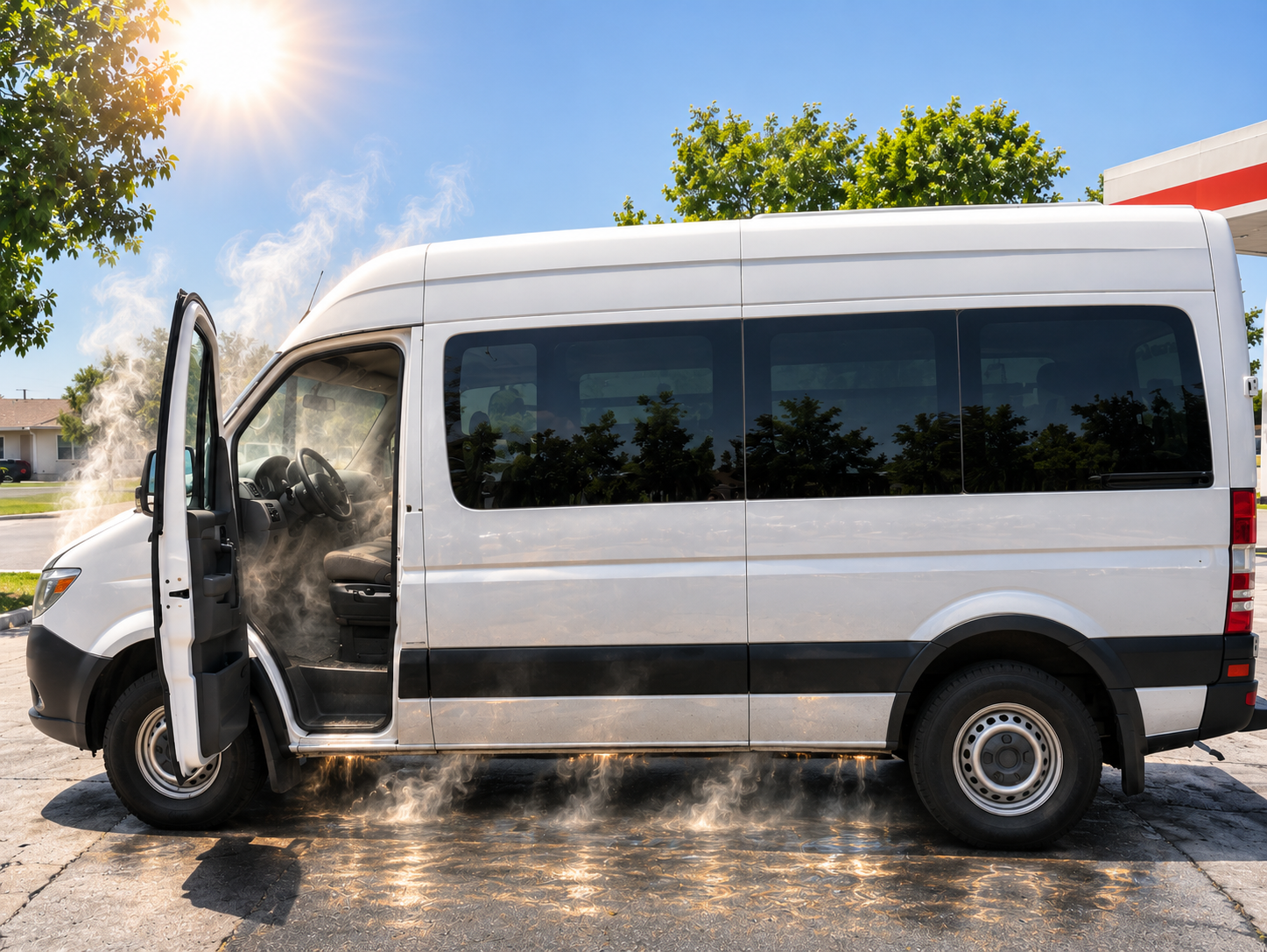
I called Shmariz Car Rental on Tuesday to reserve a 15-passenger van from Thursday through Monday. I explained that my family and my brother’s family were driving to Cleveland for Shabbat. Shmariz told me he had only one van and could not guarantee it would still be available on Thursday. To be safe, I paid for it starting Tuesday and left it in my driveway until Thursday. On Thursday morning, I discovered that the air conditioning was only blowing warm air. It was July, and driving so far with 15 people and no AC was out of the question. The mechanic could not fix it before our trip. Shmariz claimed the AC was working a few days earlier and might have broken only on Thursday. He said I technically owed rent through Monday but offered to take the van back if I paid for the first two days.
Must I pay for the entire rental? And do I owe anything for the two days the van sat unused in my driveway?
Let’s separate the remaining rental days from the two days that already passed.
The Remaining Days
Maran (Shulhan Aruch, H.M. 310:1) discusses someone who rented a hamor (donkey) for a trip, but the donkey became sick along the way. If it can still finish the journey, even with greater difficulty, the renter remains responsible for the rental, because the owner can argue that the renter’s bad mazal caused the problem. However, if the animal can no longer complete the journey, or riding it would be dangerous, the renter can claim mekah ta’ut and end the rental. The Netivot HaMishpat (310:1) explains that the owner’s argument applies only when the donkey became sick after the rental started. If it was already sick beforehand, the renter can argue mekah ta’ut. The owner cannot blame a defect that already existed on the renter’s mazal.
Similarly, if a mechanic can establish that the van’s AC was broken when you received it, you would be able to cancel[1]. But if it broke afterward, Shmariz could argue that the van could still reach Cleveland without AC. Uncomfortable does not necessarily mean unusable.
When Did the AC Break?
But what if nobody can determine when the AC broke? Maran (Shulhan Aruch, H.M. 232:11) rules that when an animal is found to have developed a defect after being purchased, we presume that the defect occurred in the buyer’s possession. The Sema (232:35) explains that this follows the principle of kan nimtza kan nit’haveh. Applying this reasoning to our case, we would presume that the AC broke after the rental began. Therefore, the same halachot would apply as if we knew it had broken afterward, even if the you didnt paid yet.[2]
Is Driving Without AC Considered Usable?
Still, who would agree to drive 15 passengers to Cleveland without AC in July? Perhaps this is like a donkey that cannot complete its trip, not one that is merely slower. Yet the poskim suggest that serious discomfort alone is not enough, even if no one rents such a thing.[3]
Umdena Demuchah
Today, many rental companies allow customers to return a vehicle if they discover a serious defect. If this is an accepted business practice, one could argue that it creates an umdena demuchah, as though both parties agreed from the beginning that a serious defect would allow the renter to cancel the remaining days. However, even if large rental companies such as Hertz and Avis commonly follow this practice, that does not necessarily establish a minhag for smaller rental companies. It is difficult to establish an umdena demuchah in this case. Therefore, unless such a practice can be established, you would still be hayav to pay for the remaining days.
The First Two Days
Even if you can cancel the remaining rental, must you pay for the first two days? Maran (Shulhan Aruch, H.M. 232:15) rules that when a sale is canceled because of a defect, the buyer must pay for any benefit he received from using the property. Here, however, you never used the van. You rented it early only to secure it for your trip. Although having the van available may itself have value, you received no actual benefit. Furthermore, the AC may have already been broken, and had you discovered this earlier, you would have returned the van immediately. Therefore, there are grounds to exempt you from paying for those days.
An Unspoken Condition
There is another reason you do not have to pay for the first two days. Maran (Shulhan Aruch, H.M. 207:3) rules that someone who sold his property because he planned to move to Eretz Yisrael may cancel the sale if the move falls through. Since he clearly explained his purpose, it is treated as though he made an explicit tenai (condition). Similarly, you explained that you rented the van early only to guarantee it for your Thursday trip. Since that purpose could not be fulfilled, the rental is treated as conditional.
Rama vs. Maran
However, the Rama (ibid.) limits this ruling to land, which people do not commonly sell without a specific reason. Movable items, however, are sold for many reasons, so an explicit tenai is necessary. The Hatam Sofer (H.M. 102), cited in Pit’hei Teshuvah (207:5), explains that Maran disagrees with the Rama, since he makes no such distinction. Nevertheless, since it is not clear that Maran disagrees, Shmariz can claim Kim Li like the Rama and keep the money.
Furthermore, even if Shmariz were not holding the money, you might still be obligated to pay for the first two days, since they were rented specifically to secure the van for the remaining days, for which you are obligated to pay.
Conclusion
You would be hayav to pay for the entire rental. For the remaining days, we presume the AC broke after you rented the van, and it could still transport you to Cleveland. Regarding the first two days, Shmariz can claim Kim Li since he holds the money. Even if he did not hold the money, there is still reason to obligate you, since those days were tied to the rest of the rental. Therefore, if Shmariz agrees to be mohel the remaining days and only charges you for the first two, you should accept his offer.
[1] The drive from the rental place to his house was very short, so he did not notice whether the air conditioning was working when he picked up the van.
[2] Tosafot Hullin 50b.
[3] The Sema (310:1) emphasizes only danger can overturn the rental. The Perisha (312:16) discusses an item in such poor condition that people would not normally rent it, yet it may still count as usable if it can perform its job. The Netivot HaMishpat (310:1) likewise indicates that a defect developing during the rental does not create mekah ta’ut if the item can still serve its ultimate purpose.