 Print this Article
Establishing a Fixed Place for Tefillah –
HaRav Yishai Natan –
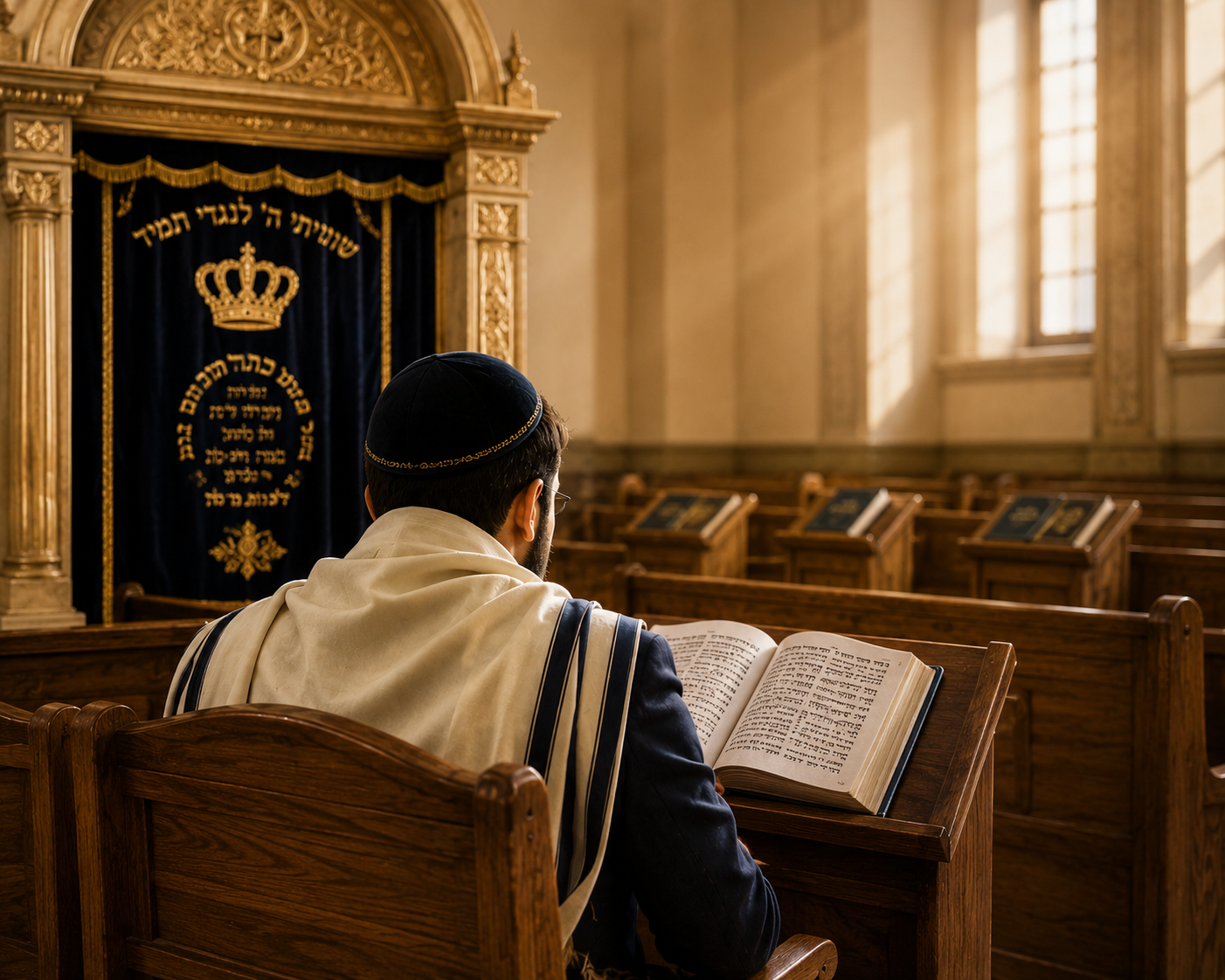
This week’s parasha, Bamidbar, discusses the degalim and the shevatim — how each tribe had a specific place around the Mishkan: east, west, north, and south. We also find that when Yaakov Avinu’s body was brought to Eretz Yisrael, he instructed that each shevet stand in a designated place while carrying the aron.
We see from here that in Judaism, place matters. There is significance to having a designated spot. One of the clearest examples of this is during tefillah in the bet knesset.
The source for this concept is the Gemara in Berachot (6b), which learns from the pasuk regarding Avraham Avinu:
“וישכם אברהם בבוקר אל המקום אשר עמד שם”
The Gemara explains that Avraham returned to the same place where he had previously stood in prayer. From here, Chazal derive the concept of kovea makom letefillato — establishing a fixed place for prayer.
Most people understand this to mean having a regular seat in shul. However, there are actually several dimensions to makom kavua.
Rabbeinu Yonah’s Opinion
Rabbeinu Yonah holds that there is no requirement to have a specific seat in a bet knesset. Since the entire shul is already designated for holiness and prayer, any spot within it is considered acceptable. According to him, the only obligation of having a fixed place applies when praying at home.
At first glance, his opinion seems logical. In a home, different areas are used for different purposes, so setting aside one place for tefillah creates a sense of kedushah. In a shul, however, the entire space is already holy.
Nevertheless, most Rishonim disagree with Rabbeinu Yonah. The Beit Yosef (Ohr HaChayim 90:19) holds like the Rosh, and many others who rule that one should indeed have a fixed place even within the bet Knesset, as its proven from Yerushalmi (4:4).
Another Meaning of “Makom Kavua”
There is another important aspect to makom kavua: having a fixed bet knesset.
A person should not constantly switch from one shul to another. Rather, there should be consistency. It does not mean every single day and every single tefillah must be in the same place, but each tefillah should have consistency.
For example: He can have one Bet Knesset for Shabbat, and another for weekday. He can have one Bet Knesset for Shacharit and one for Mincha (Pri Megadim ibid).
What Is the Main Level of Makom Kavua?
Most people assume that the highest level is having a fixed seat in shul. However, from the language of the Shulchan Aruch, it appears that the primary requirement is actually having a fixed bet knesset.
The Shulchan Aruch (ibid.) writes:
ואין די במה שיקבע לו ב”ה להתפלל אלא גם בב”ה שקבוע בה צריך שיהיה לו מקום קבוע
It is not enough merely to have a fixed synagogue; one should also have a fixed spot within the synagogue.
From this wording, it appears that the primary concept is consistency in one’s place of prayer, with the fixed seat being an additional level.
Why have a Makom Kavua?
The Shulchan Aruch (98:4) explains that since Tefillah corresponds to the korbanot in the Beit HaMikdash, therefore just as the korbanot had designated locations for the shechitah and receiving the blood, so too our tefillah should come from a designated place.
The Kaf HaChayim writes that it says in Kabbala that if one does not have a Makom Kavua, demons come and snatch his Tefillot for their food and livelihood.
The Gemara says that one who establishes a fixed place for prayer is called a chasid and an anav. This is striking, because we do not find such strong language used regarding many other mitzvot. Even if we do not fully understand why it is so significant, we clearly see that Chazal viewed it as something extremely important.
The Benefits of Having a Makom Kavua
1. Tefillah Is More Readily Accepted
The Yalkut Yosef writes that when a person has a makom kavua, his tefillot are more readily accepted.
The Arizal gives a mashal: If someone wants to break through a fortified wall, he cannot shoot at random places each time. The way to break through is by repeatedly striking the exact same spot. So too with tefillah. When a person consistently prays from the same place, the tefillot “break through” more effectively.
2. Protection From Instability and Galut
The Kaf HaChaim writes that one who has a makom kavua merits stability in life.
A person who constantly has to relocate because of financial struggles, social difficulties, or family issues experiences a form of galut. Having a makom kavua brings a certain spiritual stability that helps a person remain settled.
3. Greater Kavanah
The Meiri (Berachot 6b) explains that a fixed place improves concentration during tefillah.
When a person constantly changes seats or shuls, everything feels new and distracting. But when someone davens in the same place consistently, he becomes accustomed to the environment and can focus more deeply.
4. Increased Yirah
The Rashba writes that a designated place for tefillah creates greater yirat shamayim and seriousness toward prayer. Furthermore, without it, one becomes despaired and lazy.
Rav Avigdor Miller explained this to mean that when someone has a regular place in shul, people notice when he is missing. They ask: “Where were you yesterday?” That accountability helps maintain consistency. However, when someone constantly moves from place to place, nobody notices whether he came or not.
The same idea applies spiritually as well. Chazal (Berachot 6b) teach that when someone who is usually present in bet kenesset is absent, Hashem “asks” about him. Where was he? Let me check to see if he’s ok. Maybe there’s something I can do to help.
An Interesting Halachic Question: An Avel and Makom Kavua
An interesting halachic discussion arises regarding an avel who wants to serve as shaliach tzibur.
Suppose another mourner already has precedence in his regular shul. Should he leave his makom kavua and daven elsewhere so he can lead the tefillah? Rav Elyashiv (קובץ תשובות ח׳׳ב ס׳׳ט) held that it is preferable to go elsewhere in honor of the deceased. Rav Shlomo Zalman Auerbach (הליכות שלמה יח:כד) held that remaining in one’s makom kavua is more important. This demonstrates just how significant makom kavua is considered.
Never Cause Machloket Over a Seat
Despite all the importance of makom kavua, one thing is universally agreed upon: A person should never create machloket over a seat.
Sometimes a guest unknowingly sits in someone’s regular spot. The correct approach is not confrontation. Instead:cGreet the guest warmly. Say “Shabbat Shalom.” Politely guide him to another available seat.
Guests often feel uncomfortable entering an unfamiliar shul and being moved repeatedly from seat to seat. As long as they have another seat that they know they’ll be able to stay in, they’ll be more than happy to move. A welcoming attitude avoids embarrassment and creates a positive atmosphere.
Even better is when regular members proactively help guests find seats before any issue arises.