 Print this Article
HaRav Yishai Natan –
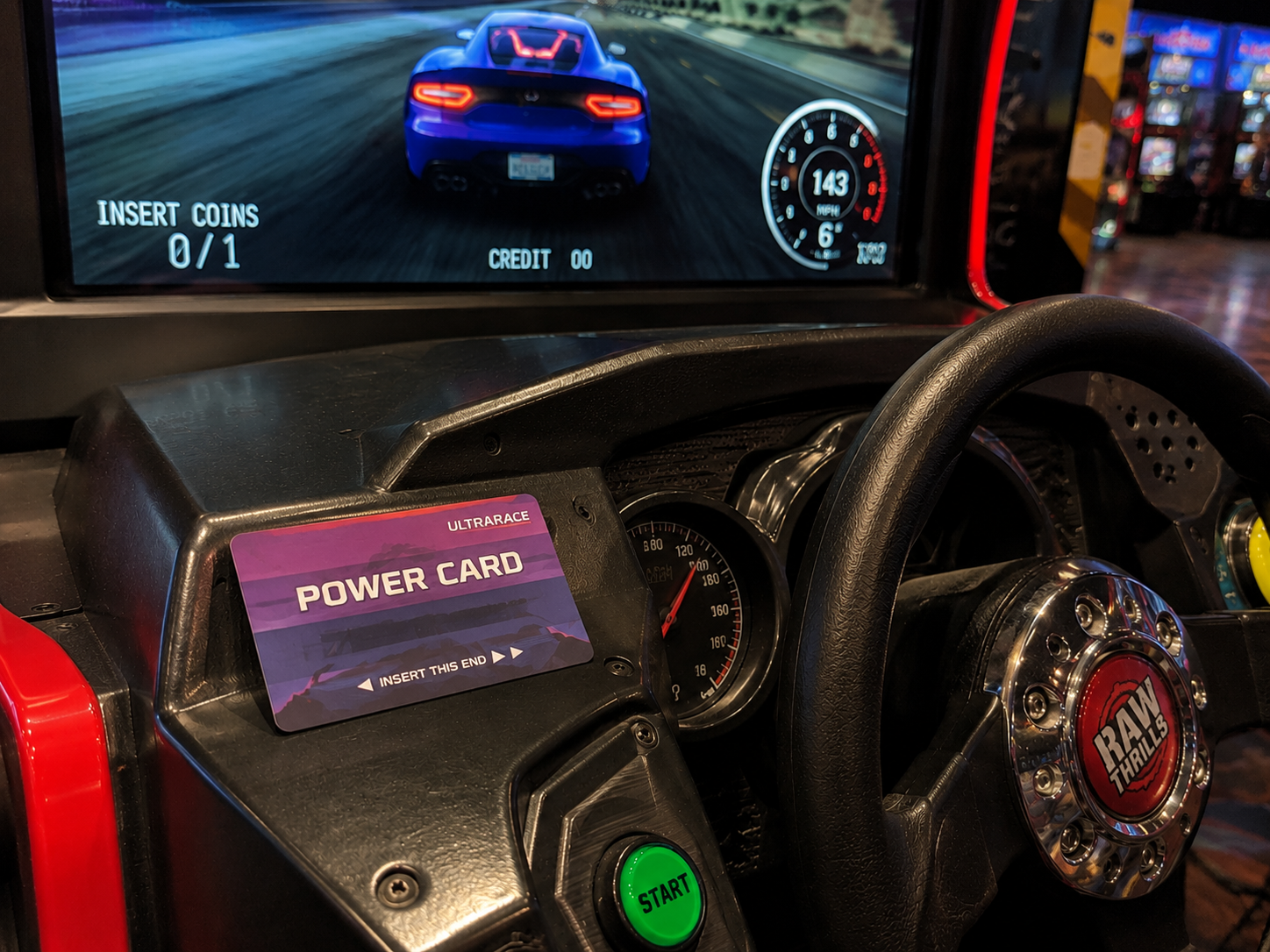
I was at the arcades yesterday with my eight-year-old son. We were waiting at a racing game for another little Jewish boy to finish playing. When he got up, we noticed that he had forgotten his play card on the machine. I knew it was his because I remembered seeing him place it on the machine before he sat down. I looked around to see if I could find him, but I had not paid close attention to what he looked like. Even though there were many goyim there, there were still quite a few Jewish boys. I wondered if perhaps the card had run out of credits and he no longer wanted it, but when I checked the reader it showed that the card still had 720 credits. We still have the card now.
Do we have to hold on to the card in order to return it, or can we keep it?
Derech Hanaha
When someone places an item somewhere intending to return shortly, it is not considered a “lost object,” and you may not pick it up, even to return it[1]. Here, however, he clearly forgot the card. Since the arcade is not a guarded place and many goyim were present, he certainly did not intend to leave it there. Therefore, it is considered a “lost object.”
Yi’ush Shelo Mi’da’at
If someone finds an item after the owner was already miya’esh, given up hope of recovering it, the item has the status of hefker and may be kept. However, if the owner did not yet realize that he lost it, and he picks it up before the owner becomes aware of the loss, we rule yi’ush shelo mi’da’at eino yi’ush[2].
Memashmesh Be’kiso Be’chol Sha’ah
There is, however, an exception. If the item is something that a person constantly checks to make sure he still has it, we assume that he realized the loss immediately and already was miya’esh. In an arcade, where the boy wants to continue playing more games, it is reasonable to assume that he checked to make sure he still had his card. Therefore, this case may fall into that category and we would assume he was miya’esh already.
Siman
This assumption only applies when the item has no siman. Since the owner realizes that he will not be able to prove ownership, he gives up hope of recovering it[3]. Since this arcade card looks like every other card and has no distinguishing siman, it may fall into this category, allowing us to assume that he was miya’esh.
However, many modern arcades are able to identify the owner of a card if it was purchased using a credit card. In that case, the ability to trace the card serves as a siman, and we would no longer assume that the owner was miya’esh. Also, since it was placed and didn’t just fall there, the place itself might be a siman[4].
Rov Goyim
However, even if an object has a siman, we still assume that the owner was miya’esh if it was lost in a place where the majority of people are goyim. Since he realizes that a goy who finds it will most likely keep it, he gives up hope of recovering it[5]. Since you said that the arcade was mostly goyim, we could assume that the owner was miya’esh even though it has a siman.
Who Owns the Card?
It could be that yi’ush will not play a role here though. If the father owns the card and merely allowed his son to use it, then we lose the heter of memashmesh be’kiso. Although the child may constantly check his own pockets, the father does not constantly check his son’s pockets and does not know that it was lost in order to be miya’esh. We would therefore return to the rule of yi’ush shelo mi’da’at eino yi’ush.
But even if the son owns the card, the son’s yi’ush will still not help because the yi’ush of a minor is not considered valid. His understanding is not sufficiently developed for his yi’ush to have halachic significance[6].
Avedah Mi’da’at
It would seem, however, that the father still owns the card and merely allows his son to use it[7]. If so, perhaps we should apply the rule of avedah mi’da’at.
When someone throws his wallet into the street and walks away, the Rama[8] rules that it is considered hefker, and anyone may take it. Maran, however, disagrees and holds that it is not actually hefker. You simply have no obligation to pick it up and return it, but you may not take it. So too here, giving something over to a minor would be an avedah mi’da’at and Maran would hold you’re not allowed to take it[9].
Conclusion
So, you are now left with an item that might have been picked up before the father was miya’esh, and therefore it would need to be returned. But since it is an avedah mi’da’at and you picked it up already, you are not required to try to find its owner.
You should record in a pinkas (journal) that you found an arcade card, the number of credits it contained, and the place where you found it. When Eliyahu HaNavi comes, iy”H, he will tell you how to locate the owner so you can return it.
In the meantime, you may use the card, but you will owe the value of those credits to the owner when you are eventually able to return them[10].
[1] Shulhan Aruch HM 260:9
[2] In other words, it is not considered hefker until the owner realizes that he lost it and actually becomes mitya’esh. If you pick it up before that, you are not allowed to keep it even after he was mitya’esh. This is a mahloket between Rava and Abaye, and is one of the six places in the Gemara where we rule like Abaye over Rava (Bava Metzia 21b).
[3] Shulhan Aruch HM 262:2
[4] Ibid. 262:3. The number of credits on the card might not be considered a siman, since you do not have to assume that the boy knows the exact balance. Especially if it still has so many credits left. Although if he were to identify the exact number of credits, it would be an excellent siman and you would have to return the card to him, you may assume that he does not know it and therefore became mitya’esh. See Igrot Moshe **?? regarding the serial number on a dollar bill.
[5] Ibid 259:3
[6] Netivot HaMishpat 261:1
[7] The father can change his mind and take it away at any moment, proving he’s still keeping ownership of the card.
[8] Shulhan Aruch HM 261:4
[9] The Gemara (Baba Batra 87b) refers to a father giving something to his son as an avedah mi’da’at. According to the Rama the card would be considered hefker, while according to Maran you still may not take it, although you would not be obligated to return it. In truth, although some poskim compare giving an item to a minor with throwing a wallet into the street (Shu”t Bah 97), most poskim distinguish between the two. A minor has some ability to guard his belongings, so this situation is not considered hefker, even according to the Rama (Ketzot HaHoshen 261:4; Netivot HaMishpat ad loc.).
[10] Shach HM 260:26