 Print this Article
HaRav Yishai Natan –
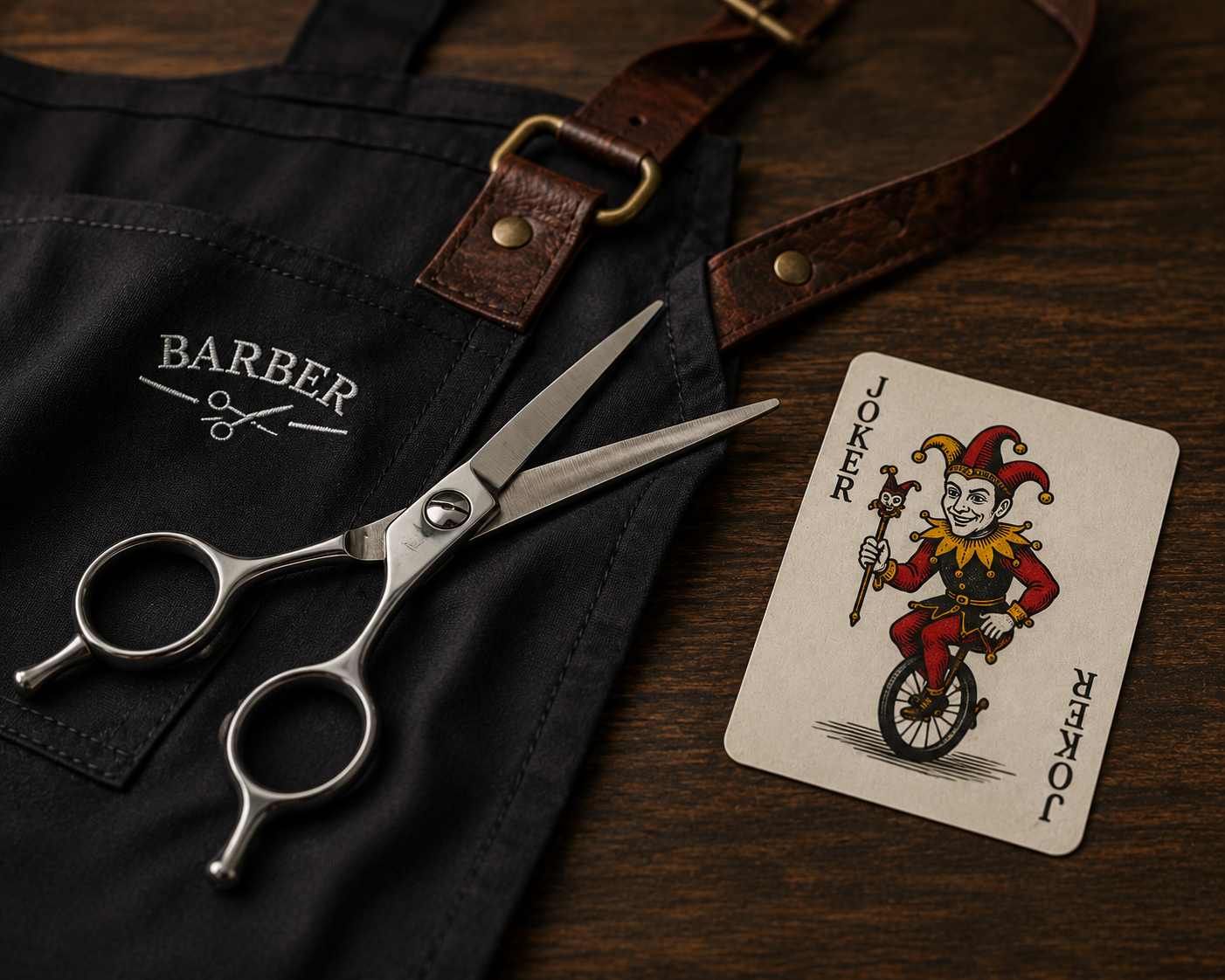
I run a barber shop that usually closes at 5:00. Today, someone came in close to closing time and asked for a haircut that normally takes twenty minutes. I wanted to go home already, so I told him, “I’m sorry, it is too close to closing.”
He said, “I’ll give you $200 if you do it now.” I agreed and gave him the haircut. Afterward, he said he was only joking and wants to pay only the regular price that I usually charge, which I told him afterwards is $50.
Is he patur from paying the amount he agreed to?
Even though the agreement was only verbal, when someone hires a worker and the worker begins the job, that itself is considered a kinyan[1]. Therefore, if the job was finished, the amount agreed upon must be paid.
However, there is a halacha of ona’ah. When someone overpays by more than one-sixth, he may cancel the sale within an allowed time and get his money back. This applies not only to sales, but also to rentals and hired workers. Since $200 is far more than one-sixth above the normal price you charge, the customer would seemingly be able to cancel the agreement and not pay the extra money. Even though the haircut cannot be returned as in a regular sale, he would instead only have to pay the regular price.
However, Shulhan Aruch[2] says there is no ona’ah by an eved, a servant. A day worker who must work at a specific time is compared to an eved and ona’ah would not apply. But if he is a kablan, meaning someone who can work whenever he wants, he is not like a servant, and ona’ah would apply.
In your case, you would be considered a day worker. Even though you get paid by the job and normally you can decide when to work, since the customer hired you for right now, and you agreed to give the haircut right now, you are considered like an eved, where there is no ona’ah[3]. Therefore, the full amount he offered would stand.
Even though the Rama holds that there is ona’ah by a day worker when the price is more than double the normal value, Maran holds that there still is no ona’ah and the price therefore will stand[4].
There is another reason to say there is no ona’ah. Since the price was obviously much higher than normal, we say he knew the regular price and forgave the ona’ah[5]. Therefore, for both these reasons, the price should remain binding.
However, the customer might have a valid claim of meshateh ani bach — “I was only joking.” There are three cases in the Gemara and Shulhan Aruch where we see this claim.
1) Someone was running from jail and needed to cross a river. He offered a boat owner much more than the trip was worth. Afterward, he may say, “I was joking,” and pay only the standard amount[6].
2) Someone’s pitcher of honey cracked and was leaking. Another man had an empty barrel and said, “If you give me half the value of the honey, I will save it.” After saving it, the owner may say, “I was joking,” and pay only the standard worker’s wage[7].
3) A widow who needs yibum or halitza sees that her late husband’s brother is not fit for her, but he wants to do yibum. They may tell him that if he does halitza, she will give him a large amount of money. Afterward, they may say they were joking and she doesn’t have to pay[8].
The reason for these cases is a debate among the Rishonim. 1) Rashi[9]and many others explain it’s because these are mitzvot that should be done for free, such as saving the man, saving the honey, and doing halitza. 2) The Ramban and Rashba explain because these people were in a desperate situation. 3) The Rosh[10] and Maharam explain that since the people exaggerated a high amount, it is clear they never meant it.
It is not clear from Maran which reason he follows, since he only brings the three cases where all the reasons apply. However, the Rama[11]says one can say meshateh ani bach by a shadchan. If someone promised a shadchan a very high amount for a shiduch, and the shadchan did it, he can say, “I was joking,” and pay only the standard amount. It seems only the Rosh fits this case, since a shadchan has no mitzvah obligation to make the shiduch[12], and the person is not desperate.
In your case, the haircut was not a mitzvah, and he was not in a desperate situation. Therefore, according to those reasons, he should not be able to say, “I was joking,” and should have to pay you the full amount.
However, according to the Rosh, he could say meshateh ani bach and therefore, he may claim kim li like the Rosh, since the Rama seems to follow this opinion[13]. Even for Sephardim, one may say kim li like the Rama, since it is not clear that Maran disagrees.
However, the Netivot HaMishpat writes that according to the Rosh, if there is no din ona’ah, one cannot say meshateh ani bach[14]. Therefore, in this case, since you are considered a day worker and there is no din ona’ah, he may not have a valid kim li like the Rosh to be patur according to Maran.
For an Ashkenazi, however, the Rama holds that when the price is more than double the regular value, there is a din ona’ah even by a worker. Therefore, he may cancel because of ona’ah and then also say meshateh ani bach according to the Rosh and be patur on the rest.
[1] Shulhan Aruch Hoshen Mishpat 333:1
[2] Ibid. 227:32
[3] Netovot HaMishpat 264:8. Also Igrot Moshe HM 1:81:1 says it could be that since once a barber starts a haircut, he cannot stop in the middle, that too would make him a day worker and not a kablan.
[4] Ibid. 227:29. They are discussing land there, but the same would apply to a day worker.
[5] A person can usually claim ona’ah because he did not know the real price. Therefore, by a sale, if he waits longer than the time it takes to show the item to a merchant, he loses his right to cancel, because we say he found out the price and accepted it. Shulhan Aruch 227:9
[6] Baba Kama 116a, Shulhan Aruch 264:7
[7] Shulhan Aruch 264:6
[8] Yevamot 106a, Shulhan Aruch Even HaEzer 169:50
[9] Yevamot 106a
[10] Teshuvot 105:1
[11] Ibid. 264:7
[12] Netivot HaMishpat 264:8
[13] Even Yaakov 28:40
[14] The Netivot HaMishpat holds that the two topics go hand in hand. In cases that are not mitzva related, one can only say meshateh ani bach because the other party took advantage of him and was over the issur of ona’ah.