 Print this Article
HaRav Yishai Natan –
Hilchot Rosh Hashanah
Understanding Halachah and Minhag
When it comes to Rosh Hashanah, it is important to understand what is actual halachah, what is a minhag, what is a chumra, and what is simply a good practice. Sometimes people assume that everything they have heard must be done, which can create unnecessary pressure and friction in the home.
Not everything discussed below has the same level of obligation. Some things are required, while others are important minhagim or recommended practices.
Birkat HaTorah Before Selihot
Before beginning Selihot in the morning, a person must first say Birkat HaTorah. Since Selihot contains pesukim, one should not simply walk into Selihot and begin saying the Yud-Gimmel Middot. First say Birkat HaTorah, which only takes a few moments, and then begin Selihot.
Erev Rosh Hashanah
Tahanun
On Erev Rosh Hashanah, we do not say Tahanun during Shaharit, just as we do not say Tahanun on other days before Yom Tov. However, Tahanun is still said as part of Selihot.
Getting a Haircut
There is a practice to get a haircut and prepare oneself properly for Rosh Hashanah. Although we are approaching a serious day of judgment, we show that we are bote’ah in the hesed of Hashem and trust that He will judge us with kindness.
A person should never think that he has enough zechuyot and does not need the hesed of Hashem. Without the kindness of Hashem, we would be in serious trouble. By preparing ourselves properly for Yom Tov, we demonstrate our trust in Him.
Going to the Mikveh
The Rama brings down the minhag to go to the mikveh on Erev Rosh Hashanah. The Mishnah Berurah writes that one should preferably not go earlier than one hour before hatzot.
However, going to the mikveh is itself a minhag and not an absolute obligation. Therefore, if going later will be difficult because the mikveh will be very crowded, a person may certainly go earlier.
If someone cannot or does not want to go to the mikveh, he can use tishah kabin of water instead. Hacham Ovadia holds that taking a shower can accomplish this, and the water does not have to be manually poured over the person. Nevertheless, going to a mikveh is preferable.
Going to a Cemetery
The Rama also brings down the minhag to visit a cemetery on Erev Rosh Hashanah.
It is very important to understand that we do not pray to the deceased or even to the tzaddikim. We pray only to Hashem. When visiting the grave of a tzaddik, we can pray to Hashem and ask that He answer us in the zechut of the tzaddikim.
Fasting on Erev Rosh Hashanah
The Shulchan Aruch writes that there is a minhag to fast on Erev Rosh Hashanah. Although most people do not fast the entire day, a more common practice is to fast until around Minhah Gedolah, approximately half an hour after hatzot.
The Steipler would make a siyum, which allowed him to eat instead of fasting.
Some people who fast want to eat before alot hashahar so they will have more energy during the fast. If someone normally wakes up and eats before alot hashahar, this is not a problem. However, according to Kabbalah, someone who does not normally eat before alot hashahar should not begin doing so simply because he plans to fast.
Hacham Ovadia writes that if someone normally fasts on Erev Rosh Hashanah but will have difficulty fasting without eating before alot hashahar, it is better for him not to fast than to eat before alot hashahar when he is not normally accustomed to doing so.
Drinking before alot hashahar does not have this same concern.
Hatarat Nedarim
It is customary among Sepharadim, and Ashkenazim, to perform Hatarat Nedarim on Erev Rosh Hashanah.
Although this is a very important minhag, it is interesting that it is not brought in the Shulchan Aruch, the Rama, or the Mishnah Berurah. The Sha’areh Teshuvah refers to the Shelah, who discusses Hatarat Nedarim.
The primary annulment of vows is Kol Nidreh on Yom Kippur. Nevertheless, it became a widespread minhag to also perform Hatarat Nedarim on Erev Rosh Hashanah.
For Hatarat Nedarim, there should be at least three people. Hacham Ovadia writes that it is preferable to have ten.
Women also have reason to participate in Hatarat Nedarim, but this is not the custom. A woman can appoint her husband as her shaliah. According to Hacham Ovadia, if the husband is acting as his wife’s shaliah, he should add at the end, vechen le’ishti, including his wife in the annulment.
Tefillah on Rosh Hashanah
HaMelech HaKadosh
During the Aseret Yemei Teshuvah, we say HaMelech HaKadosh instead of HaKel HaKadosh.
If a person mistakenly said HaKel HaKadosh and did not correct himself within toch kedei dibbur, he must return to the beginning of the Amidah.
If a person is unsure what he said on Rosh Hashanah, but he said all the special additions leading up to HaMelech HaKadosh, we can assume that he followed the Machzor and correctly said HaMelech HaKadosh.
This applies at night as well. Although there is a mahloket whether the night of Rosh Hashanah should be compared to Rosh Hodesh, our practice is that if a person definitely forgot HaMelech HaKadosh, he must go back.
Zochrenu LeHaim
If a person forgot Zochrenu LeHaim and realizes before saying Hashem’s Name in the next berachah, he should go back and say it. However, if he already said Hashem’s Name in the next berachah, he should continue and does not go back.
Oseh HaShalom
At the end of the Amidah, we say Oseh HaShalom. Hacham Ovadia writes to say Oseh HaShalom at the end of the Amidah of Shaharit and Minhah, as well as in the Kaddish Titkabal that follows the Amidah. It is not necessary for Sepharadim to change it in every Kaddish.
The word HaShalom has the same gematria as the name of the malach who writes in the Sefer HaHaim, and we therefore mention HaShalom during this time.
Forgetting Shabbat in the Rosh Hashanah Amidah
When Rosh Hashanah falls on Shabbat, a person must remember to mention Shabbat in the Amidah. If he did not mention Shabbat anywhere in the Amidah, he must go back.
If he mentioned Shabbat in the ending of the berachah but forgot to mention it in the earlier paragraphs, he does not go back.
If he mentioned Shabbat earlier in the berachah but forgot to mention it in the conclusion, there is a mahloket. Therefore, he does not go back.
In short, if he mentioned Shabbat either in the earlier part of the berachah or in its conclusion, he does not repeat the Amidah. If he did not mention Shabbat at all, he must repeat it.
The Simanim
The Importance of the Simanim
The simanim that we eat on Rosh Hashanah night are not simply a cute custom. The practice is mentioned twice in the Gemara and is brought in the Shulchan Aruch.
Rosh Hashanah is itself a siman for the coming year. This is also why a person should be especially careful not to become angry on Rosh Hashanah. We want the beginning of the year to represent peace and blessing, not anger.
The common practice is to perform the simanim on both nights of Rosh Hashanah.
Which Simanim Do We Eat?
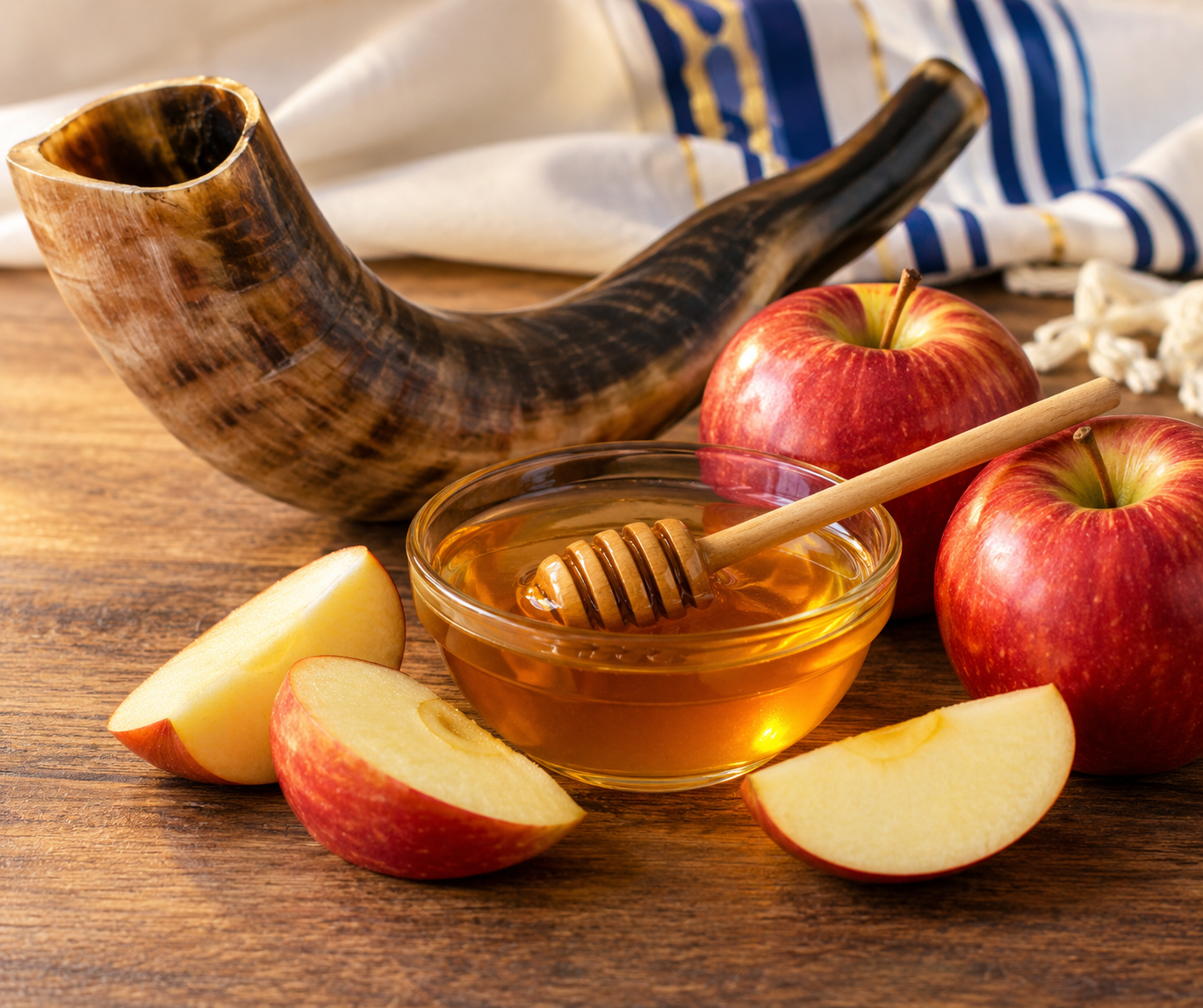
Marán in the Shulchan Aruch mentions beets, leeks, dates, and squash or gourd. The Rama adds apples in honey and rimonim. Sepharadim commonly eat these as well.
However, it is important to know the halachot of berachot in order to perform the simanim correctly.
Before or After Hamotzi?
According to halachah, it is preferable to perform the simanim after Hamotzi. Eating them before Hamotzi can create questions regarding berachot aharonot.
However, some communities, including Moroccan communities, have a minhag to perform the simanim before Hamotzi. An established minhag should be followed.
Of course, nothing may be eaten before Kiddush.
Which Fruit Comes First?
Even when the simanim are eaten after Hamotzi, a Ha’etz is still required on the fruit because fruit is not normally considered part of the meal.
Among the common simanim, there are dates, rimonim, and apples. Since dates and rimonim are from the Shiv’at HaMinim, they take priority over the apple.
Between the date and the rimon, the date comes first.
The pasuk says, “Eretz hitah u’se’orah, gefen u’te’enah ve’rimon; eretz zayit shemen u’devash.” Although rimon appears earlier in the pasuk, the order is determined by how close each fruit is to the word eretz. Devash, which refers to date honey, is second after the second eretz, while rimon is fifth after the first eretz. Therefore, the date comes first.
Checking the Date
Before making the berachah on the date, it should be opened and checked for infestation.
However, there is an advantage to making a berachah on something that is shalem, whole. Therefore, one can open the date, check it, remove the pit, and close it again. If it remains attached and appears whole, it can still be considered shalem for this purpose.
When to Say the Yehi Ratzon
The preferable order is to make Borei Peri Ha’etz on the date and take a small bite before saying the Yehi Ratzon. This avoids creating a hefsek between the berachah and eating.
After taking the first bite, say the Yehi Ratzon and then continue eating. This way avoids the question of a hefsek. One can also say the Yehi Ratzon first then say Ha’etz and eat.
A person who does not want to eat a particular siman can still look at it and say the Yehi Ratzon. It is not necessary to actually eat every siman.
Hallah, Honey, and Salt
There is a widespread practice to dip the hallah in honey. However, one should still have salt on the table as well. Some families also have a minhag to use sugar together with salt.
Spicy Foods and Nuts
The Mishnah Berurah brings down a practice not to eat spicy or bitter foods on Rosh Hashanah. This is not an absolute halachah.
The Rama also brings down the practice not to eat egozim, nuts, because the gematria of egoz is connected to het. Again, this is a minhag and not an absolute prohibition.
Sleeping on Rosh Hashanah
The Rama brings down, based on the Yerushalmi, that a person should not sleep on Rosh Hashanah because one who sleeps causes his mazal to “sleep” for the year.
However, if staying awake will cause a person to become tired, angry, and miserable, he should sleep. It is certainly better to sleep than to be angry on Rosh Hashanah even for one moment.
The Mishnah Berurah brings down that the Arizal would sleep after hatzot. Therefore, sleeping after hatzot is more lenient. Some are also more lenient regarding sleeping on the second day of Rosh Hashanah.
There is also a concept of yoshev batel ke’yashen dami—sitting around doing nothing is comparable to sleeping. If someone will simply waste his time, sleeping may be better.
Based on the idea of not sleeping on Rosh Hashanah, the Ben Ish Hai writes that a person should wake up before alot hashahar. Hacham Ovadia, however, considers this a chumra. The concern is specifically to go to sleep on Rosh Hashanah, but if someone is already sleeping, he may continue sleeping.
Tashlich
Tashlich is not brought down by Marán in the Shulchan Aruch. It is brought by the Rama, and Sepharadim also have the minhag to perform it.
When the first day of Rosh Hashanah falls on Shabbat, carrying can become an issue. If there is no eruv and a person needs to carry his Machzor, he certainly should not carry it to Tashlich.
If there is an eruv, there are different practices. Sepharadim may perform Tashlich on the first day. Hacham Ovadia writes that if a person personally does not rely on the eruv, he can have a child carry the Machzor.
The Mishnah Berurah indicates that Tashlich should preferably be performed on the first day. If it cannot be done then, it may be done on the second day. Some have a practice to perform Tashlich later during the Aseret Yemei Teshuvah.
Women also commonly perform Tashlich. However, Yalkut Yosef brings an opinion indicating that women do not need to do it and that shev ve’al ta’aseh adif, better not to do it.
Ideally, Tashlich is performed near a body of water containing fish, which serves as a siman. If there are no fish, it can still be performed near water. Technically, even a bucket of water can be used if there is no body of water available.
We are not actually throwing our averot into the water, and the fish are obviously not eating our averot. The water and fish serve as a siman.
Crying on Rosh Hashanah
Generally, there is a concept that a person should not cry on Shabbat or Yom Tov.
However, the Arizal is quoted as saying that if a person does not cry on Rosh Hashanah, his neshamah is not tovah u’shelemah. On the other hand, Yalkut Yosef writes that a person should not cry.
The proper approach is that if the tears come naturally because a person is emotionally moved by the tefillah, there is nothing wrong with crying. However, a person should not purposely try to force himself to cry.
Kiddush Before Musaf
Among Ashkenazim, there is a common practice in some communities to make Kiddush before Musaf on Rosh Hashanah. Their Musaf can be very long, which is one reason for this practice.
This is generally not the practice among Sepharadim, whose tefillah is shorter.
Women and Shofar
Hearing the shofar is a mitzvat aseh shehazeman gerama, a positive time-bound commandment. Therefore, women are not obligated in the mitzvah of shofar in the same way that men are.
A woman who hears the tekiyot certainly receives a mitzvah. However, she should understand that she is not obligated to turn the entire house upside down in order to hear them.
If leaving the house to hear shofar will cause chaos with the children, fighting, or anger in the home, it is better for her not to go. Avoiding anger and conflict on Rosh Hashanah is extremely important. If she can go hear the shofar without causing problems at home, then it is certainly a mitzvah for her to do so.
Sheheheyanu on the Second Night
The concept of having a new fruit for Sheheheyanu applies specifically to the second night of Rosh Hashanah. People sometimes mistakenly think that a new fruit is needed on the second night of every Yom Tov. That is not the case.
On the first night of Rosh Hashanah, we make Sheheheyanu just as we do on every Yom Tov.
The question arises on the second night because the two days of Rosh Hashanah are considered kedushah ahat, one continuous kedushah. Therefore, there is a question whether a new Sheheheyanu should be recited for the second day.
Because of this question, we place a new fruit on the table. When saying Sheheheyanu during Kiddush, we have both the second day of Rosh Hashanah and the new fruit in mind.
We do not make a separate Sheheheyanu on the fruit. The Sheheheyanu recited during Kiddush covers both the day and the fruit.