 Print this Article
HaRav Yishai Natan –
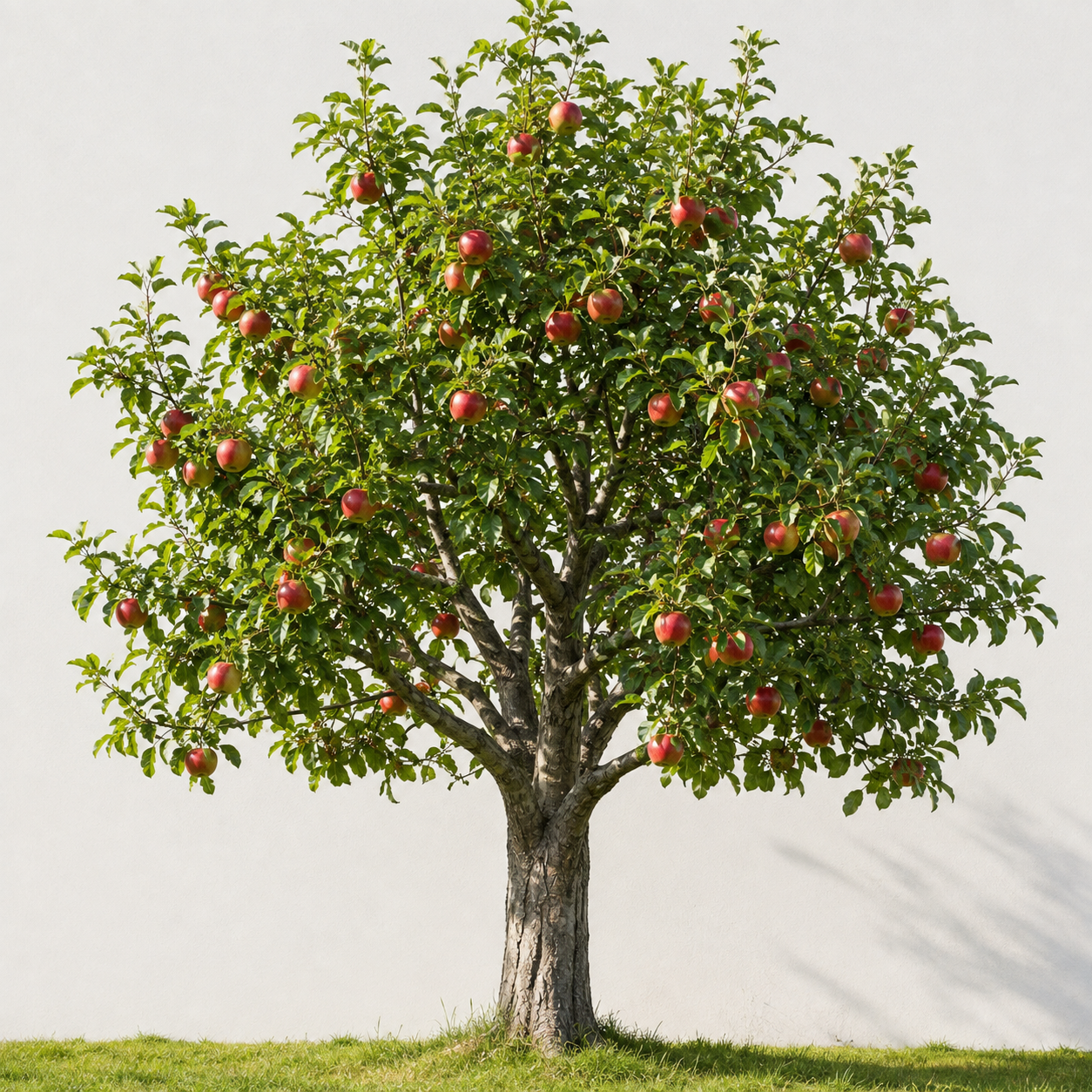
The Torah says: “When you besiege a city for many days to wage war against it and capture it, you shall not destroy its trees by wielding an axe against them, for you may eat from them, and you shall not cut them down.” (Devarim 20:19)
The Torah tells us that when laying siege to a city, we may not cut down its fruit trees. Since the trees provide food and are useful, we should not destroy them unnecessarily.
From here, Hazal teach us the general prohibition of Bal Tash’hit—not to unnecessarily destroy useful things. The Rambam codifies this prohibition and explains that it extends beyond fruit trees to other forms of needless destruction (Hilchot Melachim 6:8–10). The prohibition against destroying fruit trees is discussed in Bava Kama 91b.
The Sefer HaHinuch explains the idea behind this mitzvah is to train ourselves not to become people who enjoy destruction. When a person destroys useful things for no reason, he trains himself to enjoy destruction. The Torah wants us to develop the opposite nature—to appreciate and preserve what is good.
Rabbi Avigdor Miller would often teach: whenever you enter a room, make sure you leave it either the same as when you entered or better. Never leave it worse. If there was no tissue on the floor or table when you entered, don’t leave your tissue there when you leave. The idea is simple: don’t make the world worse than you found it.
We are not going to talk about the issur of Bal Tash’hit, but rather the source of the issur which is the actual cutting of a tree that still produces fruit.
Cutting Down a Fruit Tree
What is especially interesting about this halachah is that although the prohibition against cutting down fruit trees is explicitly brought by the Rambam, it is not explicitly written as its own halachah in the Shulhan Aruch.
Yet this is probably one of those halachot that everyone seems to know. Tell someone you are cutting down a fruit tree, and immediately you hear, “Has veshalom! You can’t cut down a fruit tree!”
The Taz in Yoreh De’ah 116:6 and later poskim question why this law does not appear explicitly in the Shulhan Aruch. The prohibition itself, however, is clearly established in the Gemara and Rambam.
But there is another fascinating issue. Is cutting down a fruit tree merely an issur, or is it also a sakanah—a danger? In the book of Rav Yehuda HaHasid he writes that cutting down a fruit tree is a sakanah. If there is an issur to cut it down, why is he only mentioning that it is a sakanah?
Is It an Issur or a Sakanah?
The Gemara in Bava Kama 91b relates that Rabbi Hanina said that his son, Shivhat, died because he cut down a fig tree prematurely.
That is frightening. This is probably one reason people are especially nervous about cutting down fruit trees. The Gemara itself connects cutting down a fruit tree with a person’s death.
But that creates a major question. If cutting down the tree was already assur, why do we need an additional concept of sakanah?
There are two basic approaches.
The Opinion of the Ya’avetz
The She’elat Ya’avetz (1:76) takes a very strict position. There are certain situations in which, according to the basic halachah, one is permitted to cut down a fruit tree. Nevertheless, the Ya’avetz understands that there can still be a sakanah in doing so. For example, the Rambam writes that if one fruit tree is damaging other, more valuable trees, it may be cut down. More generally, the poskim discuss situations in which a fruit tree is causing significant damage as legitimate grounds for removing it.
According to the Ya’avetz, however, even when there is a valid heter and the actual prohibition does not apply, there is still a concern of sakanah. The Gemara’s story about Rabbi Hanina’s son is understood as demonstrating this additional danger. Obviously he didn’t do anything that was assur. Therefore, must be that even though what he did was mutar, it still carried with it danger.
According to this approach, it is very difficult to find a completely comfortable situation in which to cut down a fruit tree.
Hacham Ovadia Yosef’s Opinion
Hacham Ovadia Yosef, however, strongly disagrees with this approach in Yabia Omer (vol. 5, Yoreh De’ah 12). He writes that it does not make sense to say that the Torah permits cutting down the tree in a particular situation while an independent danger still remains. Rather, the sakanah accompanies the issur. Where there is an issur, there is also a concern of sakanah. But when the circumstances are clearly permitted according to halachah, the sakanah does not apply. This is the approach accepted by a number of other Aharonim as well including the Hida (Haim She’ol 23) and Hikreh Lev.
But what about Rabbi Hanina’s son? According to this approach, Hacham Ovadia writes that he must have mistakenly believed that he was permitted to cut down the tree. The Gemara immediately before this story discusses when a tree has become so unproductive that it may be cut down. For certain trees, the Gemara gives a minimum amount of fruit production. If the tree produces less than that amount, it is no longer included in the regular prohibition. Rabbi Hanina’s son apparently misjudged the tree and thought it had reached the point where it could be cut down, when in reality it was still producing enough fruit to remain protected by the prohibition. Therefore, his action was not actually mutar. He made a mistake in the halachah.
According to Hacham Ovadia, then, when the situation is genuinely permitted, there is no independent sakanah. Nevertheless, because of the seriousness of the issue, people are understandably very careful with fruit trees.
When May a Fruit Tree Be Cut Down?
There are several important situations in which cutting down a fruit tree can be permitted.
The Rambam writes that if a tree is causing damage—for example, it is harming other, more valuable trees—it may be removed.
The Rosh (Bava Kama 8:15) adds another important case: if a person needs the actual location occupied by the tree, there can be grounds to remove it. Later authorities apply this discussion to building a home or making necessary use of the property.
However, the Havot Yair (195) limits this considerably. If a person genuinely needs to build because his home is too small for his family, that is one thing. But if he merely wants a larger or more luxurious addition, without a real need, the Havot Yair is much more hesitant to permit cutting down a fruit tree simply for additional comfort or space.
Hacham Ovadia discusses these opinions in Yabia Omer and permits necessary home expansion under the appropriate circumstances, while carefully weighing the value and necessity of the proposed construction. So if someone has a large family and truly needs to expand his house, there is a basis for permitting removal of the tree. If he simply says, “I’d like another twenty feet because it would look nicer,” that is already a much more serious question. Likewise, the Kaf HaHaim (116:85) holds the same.
Cutting Branches
Cutting branches is different from cutting down the actual tree. Most poskim permit pruning or removing individual branches.
Uprooting and Replanting the Tree
What can someone do when a fruit tree really needs to be removed?
One possibility is to uproot the tree together with enough of its root system and soil so that it can be replanted elsewhere and continue living. This is generally much easier with a small tree. Once the tree becomes very large and established, successfully transplanting it may be difficult.
Nevertheless, when it can realistically be done, many poskim view transplanting the tree as an important basis for leniency because the tree is not actually being destroyed. The Ya’avetz himself discusses uprooting a tree in a manner in which it will survive and be replanted.
Can You Ask a Non-Jew to Cut It Down?
Another possibility people suggest is simply hiring a non-Jew to cut down the tree.
But merely telling a non-Jew, “You cut it down for me,” does not automatically solve the problem. If the act is prohibited for you and the non-Jew is simply acting on your behalf, there are additional halachic issues that must be considered.
A more accepted method used in difficult cases is to actually sell the tree, together with a portion of the land surrounding it, to the non-Jew. Once the sale is valid, the tree belongs to him. He can then remove his own tree. Of course, this cannot be a fake sale. It has to be a legitimate halachic transaction, with a proper shetar and a valid kinyan transferring the tree and the necessary portion of land.
The Mahaneh Ephraim — Is a Worker Like the Owner?
The Mahaneh Ephraim however addresses a problem with this approach. He holds that there is a concept of yad po’el ke-yad ba’alim—that in certain situations, an employee’s hand can be viewed as an extension of his employer’s hand.
He writes it regarding the idea in the mitzvah of building a ma’akeh, a protective railing around a roof or balcony. There is a berachah associated with performing the mitzvah of ma’akeh. But very often, the owner does not personally install the railing. He hires workers, and frequently the actual workers are non-Jews. Can the Jewish owner make the berachah if a non-Jewish employee actually installs it? The Mahaneh Ephraim maintains that under certain circumstances we can consider the employee’s action like the employer’s own action because of yad po’el ke-yad ba’alim.
If so, also after selling the tree to a non-Jew, however when you hire the non-Jew to cut the tree down, it’s as if you are cutting the tree and is assur. However, this opinion is not generally followed to the extent of treating the non-Jewish worker’s physical performance of the mitzvah as the Jewish owner’s own act for purposes of making the berachah.
Furthermore, there is an important distinction between a po’el, a worker hired to work under the employer’s direction for a period of time, and a kablan, an independent contractor hired to accomplish a particular job. A kablan controls how and when he completes the work to a much greater degree. Therefore, even according to the Mahaneh Ephraim, the worker’s hand would not be considered like the employer’s hand would be mutar.
When someone hires a tree-removal company, he generally does not hire the worker by the hour and control every action. He pays the company to remove the tree. That is much closer to a kablan and would be mutar according to everyone.
The Best Solution
Therefore, when a person has a fruit tree that he needs to remove, but the situation is questionable—or he wants to account even for the stricter opinion of the Ya’avetz concerning sakanah—there are several possible solutions.
If practical, the best option may be to uproot the tree in a way that allows it to survive and replant it somewhere else.
Another method used by the poskim, even lechahila, is to arrange a genuine sale of the tree and a portion of the surrounding land to a non-Jew and have the non-Jew remove his own tree. The details of such a sale have to be done properly according to halachah; it should not be treated as a casual technicality.
But according to the strict halacha, if it mutar to cut down the tree, there is no further problem of sakanah.