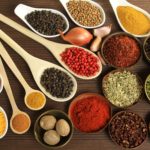
Laws related to Berachot In a recent Halacha Yomit you mentioned that according to many opinions the Beracha on cloves is Bore Mine Besamim. Can you please explain why? On which other spices does one recite Bore Mine Besamim? The Beracha of “Bore Mine Besamim” is recited on spices that don’t fit into any of the general categories. On aromatic fruit, we say the blessing … [Read more...]
Halachot of Daily Living

Laws Related to Berachot These are some Berachot which fall in the middle between the two categories mentioned last week– that is – they aren’t clearly obligatory or not obligatory, and it is questionable if they can count as part of the 100 Berachot or not: Amen in response to the blessing on an Aliya to the Torah, or on the Berachot of the Haftarah: On the one hand, the … [Read more...]
Halachot of Daily Living

To be counted towards the one hundred Berachot, must one personally recite the Beracha, or is it sufficient to respond amen to another person’s Beracha? It depends on the Beracha. If the Beracha is obligatory (such as Kiddush or HaMotzi) and a person fulfills the requirement to recite the Beracha by hearing it from another, the Beracha can be included in a person’s daily … [Read more...]
Halachot of Daily Living

Does the obligation to recite one hundred Berachot apply even on Shabbat? Yes. Although on Shabbat the Tefillot contain fewer Berachot, one must still fill the quota of 100 Berachot. On Friday night, one recites 11 Berachot during Arvit, and an additional 47 Berachot are recited during Shaharit, Musaf and Minha. One must eat three meals on Shabbat which adds another … [Read more...]
Halachot of Daily Living
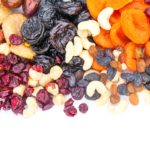
Laws related to Berachot What Beracha is recited on papaya? We recite Bore P’ri Ha’Etz on fruit and Bore P’ri Ha’Adama on vegetables. Is papaya treated as a fruit or a vegetable? A related issue is whether or not the first three years of a papaya plant’s fruit is treated as ‘Orla and may not be consumed? ‘Orla applies only to fruit and not to vegetables. … [Read more...]